

If you're preparing to sell a home in Colorado, the first legal document you'll sign is probably a listing agreement. Most sellers treat it like routine paperwork, but that thinking can cost you thousands. A listing agreement is a binding real estate contract between you and a licensed broker that defines who has the right to market your property, what the broker gets paid, and what happens if things don't go as planned. Understanding this contract before you sign it isn't optional. It's how you protect yourself from commission disputes, surprise obligations, and misaligned expectations throughout the sale.
Table of Contents
- Key takeaways
- What is a listing agreement and what it covers
- Types of listing agreements in Colorado
- 2026 Colorado regulations you need to know
- How a listing agreement works in practice
- How to negotiate your listing agreement
- My honest take on listing agreements in Colorado
- Sell smarter with Homesavvycolorado
- FAQ
Key takeaways
| Point | Details |
|---|---|
| What the contract does | A listing agreement grants your broker authority to market and sell your property under defined terms. |
| Commission varies by type | Exclusive right to sell, exclusive agency, and open listings each carry different commission obligations for sellers. |
| 2026 Colorado changes | New rules require brokers to obtain your informed consent before sharing confidential information internally. |
| Duration matters | Most listing agreements run 3 to 6 months, and knowing your exit options before signing prevents headaches. |
| Negotiation is allowed | Commission rates, contract length, and termination clauses are all negotiable before you sign. |
What is a listing agreement and what it covers
A listing agreement is formally defined as a contract between a property owner and a real estate broker that grants authority to market and sell the property. It's not a handshake deal. It's a written document that spells out the price, the timeline, the commission, and exactly what the broker is authorized to do on your behalf.
The core components you'll see in every standard listing agreement include:
- Listing duration. Most agreements run 3 to 6 months, long enough for a serious broker to do the work, short enough to keep them accountable. If the home doesn't sell, you can relist or switch brokers after the term expires.
- List price. This is the asking price you and your broker agree on. You retain the right to reject any offer, but the price anchors your marketing strategy from day one.
- Commission structure. The agreement specifies the percentage you owe, when it's owed, and to whom. This is where many sellers get surprised, so read this section twice.
- Marketing authorizations. Brokers need your written permission to install a lockbox, put up a yard sign, photograph your home, or list it on the MLS. These authorizations live inside the listing agreement.
- Cooperation with other brokers. The agreement defines whether and how your broker will work with buyer's agents, including how buyer-side compensation is handled.
- Your obligations. You'll be required to provide property disclosures, keep the home accessible for showings, and maintain the property in the condition represented.
Pro Tip: Ask your broker to walk through every clause before signing. A listing agreement defines responsibilities and expectations for both parties, and anything you don't understand now will likely become a problem later.
Types of listing agreements in Colorado
Not all listing agreements work the same way. The type you choose directly affects what you owe in commission and how much flexibility you have. Here's how the three main types compare:
| Agreement type | Who owes commission | Seller finds buyer | Broker exclusivity |
|---|---|---|---|
| Exclusive right to sell | Always owed to broker | Commission still owed | Full exclusivity |
| Exclusive agency | Only if broker finds buyer | No commission owed | Exclusive broker only |
| Open listing | Only to procuring broker | No commission owed | None, multiple brokers allowed |
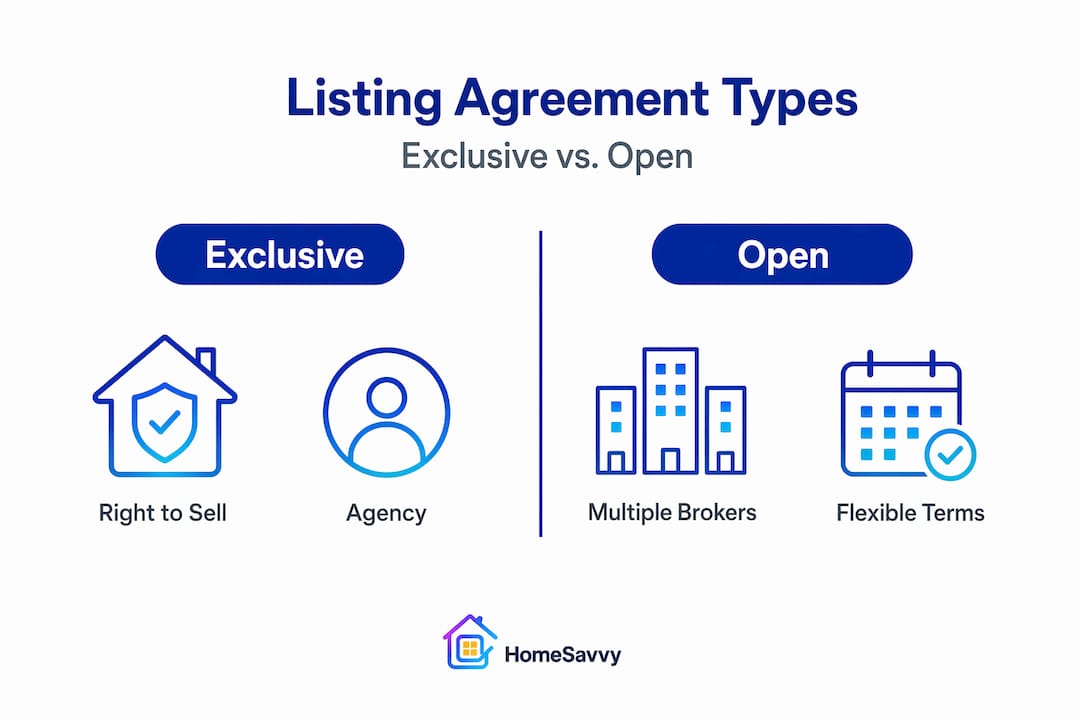
The exclusive right to sell is the most common agreement in Colorado. Under this type, commission is owed regardless of buyer origin, meaning even if your neighbor buys your house after seeing your yard sign, you still owe the broker their fee. Most full-service agents require this type.
The exclusive agency agreement gives one broker the right to sell, but if you personally find the buyer without any broker involvement, you owe no commission. It sounds attractive, but many top agents won't accept these terms because their effort is less protected.
The open listing means you can work with multiple brokers simultaneously, and only the one who actually produces a ready, willing, and able buyer gets paid. It's common in commercial real estate but rare in Colorado residential sales because it reduces broker motivation.
A few things sellers commonly misunderstand about these types:
- Signing an exclusive right to sell does not mean you can't also list with a buyer's agent independently. It means you owe commission to your listing broker no matter who finds the buyer.
- Exclusive agency doesn't mean you're free to list with other brokers. It means you've given one broker exclusivity while reserving the right to sell yourself.
- Open listings rarely generate the marketing investment that moves homes quickly.
Pro Tip: Before choosing your agreement type, read about Colorado listing agreement options and how each affects your commission obligations. The wrong choice for your situation can be expensive.
2026 Colorado regulations you need to know
Colorado made significant changes to listing agreement rules at the start of 2026, and they affect both how brokers operate and what you can expect during your transaction.
- Informed consent for confidential information. Starting January 1, 2026, Colorado brokers must obtain informed consent before sharing any confidential client information within the brokerage, including with supervising brokers. This is a direct result of Colorado's designated brokerage law.
- Designated brokerage structure. Under Colorado's framework, only your designated broker holds an agency relationship with you. That means confidential information access is limited inside the brokerage itself, and colleagues cannot freely access your file without your permission.
- Removal of paragraph 5.3. The Colorado standard listing contract removed a clause that previously allowed internal sharing without explicit consent, changing internal brokerage workflows and requiring new consent documentation.
- New Seller's Property Disclosure form. As of 2026, Colorado sellers must provide an updated disclosure form when their listing goes under contract. This is mandatory, not optional, and older forms from prior years are no longer accepted.
- Slower but more transparent processes. The new confidentiality requirements have adjusted broker workflows, which may add steps to your transaction timeline. That's the trade-off for stronger client protection.
These 2026 changes reflect a broader shift in Colorado real estate toward greater seller privacy and informed decision-making. If your broker presents a listing agreement without mentioning consent requirements or the updated disclosure form, that's a red flag worth addressing before you sign.
How a listing agreement works in practice
Once you sign, the clock starts. Here's what the typical process looks like from signing to closing:
- Week one. Your broker activates the marketing plan: MLS listing, photography, signage, and digital promotion. The agreement authorizations you signed cover all of this.
- Showings and offers. Buyers tour the home. Your broker presents offers, explains terms, and advises you through negotiations. Your job is to stay accessible and respond promptly.
- Accepted offer. When you accept an offer, the listing agreement continues to govern broker duties until closing. This is where commission becomes definitively owed.
- Disclosures. You're required to complete and deliver all required disclosure forms, including the new 2026 mandatory form for Colorado transactions. Failing to do this properly can delay or kill a deal.
- Closing. Commission is paid at closing from proceeds. The listing agreement terminates upon successful closing.
A common pitfall: sellers sometimes believe they can cancel a listing agreement freely if they change their mind. Most agreements include an early termination clause that may require payment of broker expenses or even the full commission if you pull the home off the market without cause. Commission dispute outcomes in court often depend entirely on the exact wording of the listing agreement and whether changes were made in writing.
Pro Tip: If you need to exit a listing agreement early, do it in writing and get a written release from your broker. Verbal agreements about changing contract terms carry no legal weight.

How to negotiate your listing agreement
Most sellers don't realize the listing agreement is negotiable before signing. Here are the areas where you have real leverage:
- Commission rate. Colorado has no legally mandated commission rate. You can negotiate this, especially with a well-priced home in a hot market. Understanding Colorado listing fees before you sit down with a broker puts you in a much stronger position.
- Contract length. If a broker pushes for a 12-month term, push back. Three to six months is standard. Shorter terms keep your broker motivated and give you flexibility.
- Termination clause. Ask specifically what happens if you want to exit early. Some brokers will agree to a mutual release with no fees if certain conditions aren't met, like a minimum number of showings.
- Buyer agent cooperation. Ask your broker how they plan to cooperate with buyer's agents and what compensation they'll offer. This directly affects how many agents will bring buyers to your door.
- MLS and marketing plan. Get the marketing commitments in writing inside the agreement. A promise to run ads means nothing if it's not documented.
- Confidentiality consent. Under the new 2026 rules, you'll be asked to sign a consent form for internal information sharing. Read it carefully. You're entitled to know exactly who in the brokerage can access your confidential information.
Learning how to negotiate realtor fees before you sign is one of the highest-leverage moves a Colorado seller can make. The listing agreement sets the financial terms of your entire transaction. Getting those terms right upfront is far easier than trying to renegotiate once the process is underway.
My honest take on listing agreements in Colorado
I've seen sellers treat listing agreements like a routine formality, sign in five minutes, and then spend weeks trying to untangle obligations they didn't understand. The ones who read and negotiated their contracts before signing consistently had better outcomes, fewer disputes, and lower costs.
The 2026 confidentiality changes are genuinely good for sellers, even if they slow things down. I've watched situations where a seller's motivation, financial pressure, or urgency leaked through internal brokerage channels in ways the seller never intended. The new informed consent requirement fixes that. It puts you back in control of who knows what about your situation.
What I've learned is that the type of listing agreement matters more than most sellers realize. The commission obligations by listing type can mean the difference between paying 2.5% and paying nothing if you find your own buyer. That's not a small distinction on a $600,000 Colorado home.
My honest advice: don't sign anything until you understand the commission trigger, the exit terms, and the confidentiality provisions. Those three things determine most of what can go wrong. Everything else is details.
— Rishi
Sell smarter with Homesavvycolorado

Understanding a listing agreement is the first step. Getting the right one, with the right terms, at the right cost, is where Homesavvycolorado comes in. Colorado sellers who work with Homesavvycolorado pay just 1% in listing fees instead of the typical 2.5% to 3%, keeping thousands more at closing. Before you set a price, use the PropertyIQ AI valuation tool to understand your home's real market value with current Colorado data. When it comes to commission, Homesavvycolorado's model is built around saving you money. See how the rebate model works and what it means for your transaction. The platform combines licensed agent support with real-time market data so you never sign a listing agreement without knowing exactly what you're getting into.
FAQ
What is a listing agreement in simple terms?
A listing agreement is a written contract between a home seller and a real estate broker that gives the broker authority to market and sell the property under agreed terms, including price, timeline, and commission.
What are the main types of listing agreements?
The three main types are exclusive right to sell, exclusive agency, and open listing. Each carries different rules about when commission is owed and whether the seller can work with multiple brokers.
How long does a listing agreement last in Colorado?
Most listing agreements in Colorado run between 3 and 6 months. After expiration without a sale, sellers can relist with the same broker or switch to a new one.
What changed about listing agreements in Colorado for 2026?
Starting January 1, 2026, Colorado brokers must obtain your informed consent before sharing confidential client information within the brokerage. Sellers must also provide an updated mandatory disclosure form when their listing goes under contract.
Can I negotiate the terms of a listing agreement?
Yes. Commission rates, contract length, termination clauses, and marketing commitments are all negotiable before you sign. Reviewing Colorado listing fee structures in advance strengthens your negotiating position.