
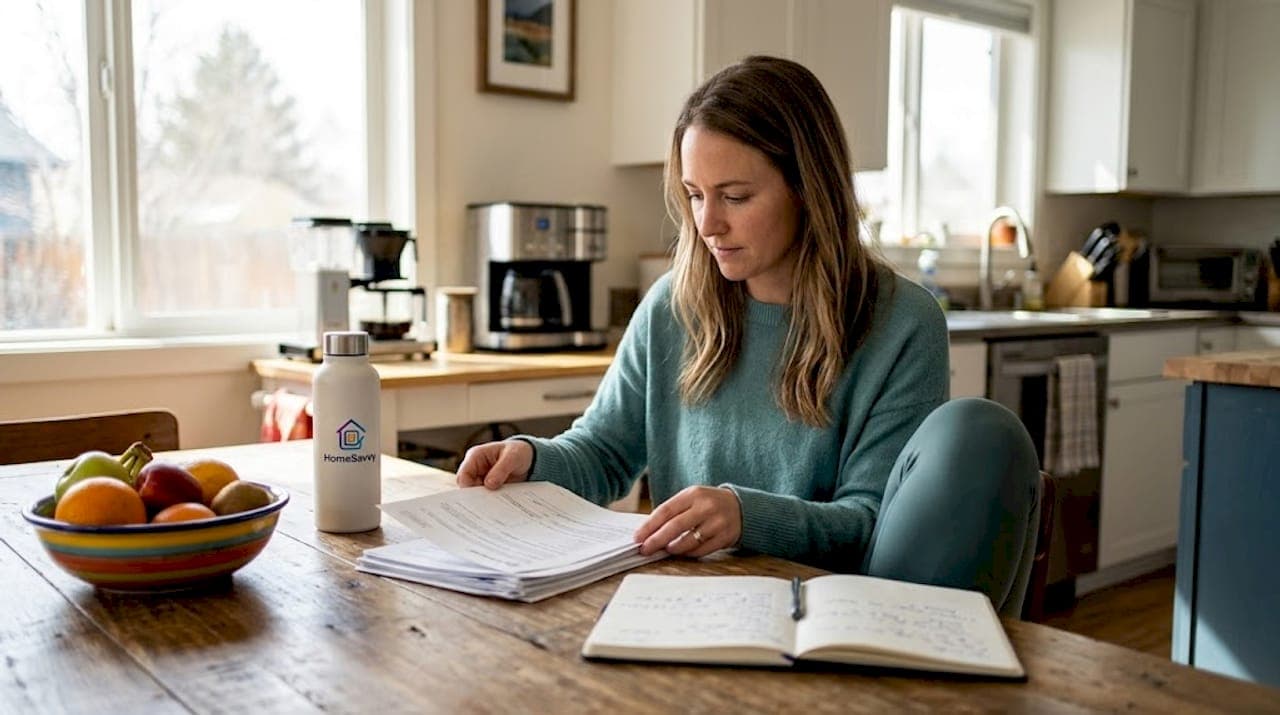
Most Colorado buyers and sellers know closing costs exist, but few understand what they actually include until they're staring at a settlement statement the week before closing. Real examples of closing costs in Colorado range from appraisal fees and loan origination charges to agent commissions and prepaid property taxes. Buyers typically pay 2% to 5% of the purchase price, while sellers often pay 6% to 10%, mostly because of agent commissions. This guide breaks down exactly what you'll pay, with real numbers at common Colorado price points, so there are no surprises at the table.
Table of Contents
- Key takeaways
- 1. Examples of closing costs in Colorado for buyers
- 2. Examples of seller closing costs in Colorado
- 3. Colorado closing cost comparison by home price
- 4. Strategies to reduce your closing costs in Colorado
- 5. Special considerations for first-time buyers and higher-priced homes
- My honest take on closing costs in Colorado
- How Homesavvycolorado helps you save at closing
- FAQ
Key takeaways
| Point | Details |
|---|---|
| Buyers pay 2% to 5% | On a $540,000 home, that means $10,800 to $27,000 in closing costs before moving in. |
| Commissions drive seller costs | Agent fees make up 70% to 80% of a seller's total closing costs in most Colorado transactions. |
| Colorado transfer tax is minimal | At $0.01 per $100 of sale price, sellers pay just $40 on a $400,000 home. |
| Most fees are negotiable | Loan origination fees, title services, and even commissions can be reduced by shopping around. |
| Assistance programs exist | CHFA grants and NeighborhoodLIFT programs can cover thousands in upfront buyer costs. |
1. Examples of closing costs in Colorado for buyers
Buyer closing costs in Colorado cover a mix of lender fees, third-party service charges, and prepaid expenses. These are the costs you pay to get the loan funded and the property legally transferred into your name.
Here are the most common examples, with typical ranges:
- Loan origination fee: 0.5% to 1% of the loan amount. On a $400,000 loan, that's $2,000 to $4,000. This fee compensates the lender for processing your mortgage.
- Title search: $250 to $600. A title company reviews public records to confirm the seller has a clean right to sell the property.
- Lender's title insurance: $500 to $1,500 depending on the loan size. Protects the lender if a title dispute surfaces after closing.
- Appraisal fee: $450 to $750. Required by most lenders to verify the home's market value before approving your loan.
- Home inspection: $300 to $600. Technically paid before closing, but counts toward your total out-of-pocket pre-close expenses.
- Credit report fee: $30 to $50. A small but real line item on your Loan Estimate.
- Recording fees: $50 to $200. Charged by the county to officially record the deed and mortgage documents.
- Prepaid property taxes: Varies widely. You'll typically prepay 2 to 6 months of property taxes into an escrow account at closing.
- Prepaid homeowner's insurance: Usually your first year's premium, paid upfront. Expect $800 to $1,500 for a mid-range Colorado home.
- Prepaid mortgage interest: Covers interest from your closing date to the end of the month. On a $400,000 loan at 7%, that's roughly $78 per day.
Buyer closing cost items like loan origination and appraisal fees vary by lender and loan type. FHA loans, for example, add an upfront mortgage insurance premium of 1.75% of the loan amount. VA loans eliminate some fees but add a funding fee that can range from 1.25% to 3.3%.
Pro Tip: Request a Loan Estimate from at least three lenders within a 45-day window. Multiple mortgage inquiries in that period count as one credit pull, so there's no penalty for comparing. Loan origination fees alone can differ by thousands between lenders on the same loan amount.
2. Examples of seller closing costs in Colorado
Sellers often underestimate their closing costs because they focus on the sale price rather than the net proceeds. Here's what actually comes out of that number before you walk away with a check.
- Real estate agent commissions: Typically 5% to 6% of the sale price, split between listing and buyer's agent. On a $540,000 home, that's $27,000 to $32,400. Agent commissions represent 70% to 80% of most sellers' total closing costs.
- Owner's title insurance policy: $1,000 to $2,500, depending on sale price. Unlike the lender's policy (which buyers pay for), the owner's policy protects the buyer if title issues arise after closing. In Colorado, the seller traditionally pays this.
- Documentary transfer tax: Colorado has one of the lowest transfer taxes in the country. At $0.01 per $100 of sale price, the fee is just $40 on a $400,000 home. Not worth stressing over.
- Recording fees: $50 to $200 to record the release of your mortgage and the new deed.
- Prorated property taxes: If your sale closes mid-year, you'll owe property taxes for the portion of the year you owned the home. This gets calculated at closing and deducted from your proceeds.
- HOA fees and transfer charges: In communities with a homeowners association, expect to pay prorated dues plus a transfer fee, typically $100 to $500.
- Home warranty (optional): Sellers sometimes offer a one-year warranty, around $400 to $700, as a buyer incentive.
- Lien payoff costs: If you have a mortgage balance, it gets paid from proceeds. Any prepayment penalty, though rare today, would also appear here.
Administrative seller costs, excluding commissions, typically run about 1% to 2% of the sale price. The commission is almost always the dominant expense.
Pro Tip: Sellers in Colorado can reduce their commission costs significantly by working with a reduced-fee listing agent. Check out discount listing options that charge as little as 1% to list your home, compared to the traditional 2.5% to 3% listing side commission.

3. Colorado closing cost comparison by home price
Here's how buyer and seller costs stack up across three common Colorado price points. These are estimates based on typical fee ranges, not guarantees.
| Cost Item | $250,000 Home | $400,000 Home | $540,000 Home |
|---|---|---|---|
| Buyer: Loan origination (0.75%) | $1,875 | $3,000 | $4,050 |
| Buyer: Appraisal | $450 | $550 | $750 |
| Buyer: Title search + lender's title | $750 | $1,000 | $1,500 |
| Buyer: Prepaid taxes + insurance | $2,000 | $3,200 | $4,500 |
| Buyer: Other fees | $400 | $450 | $500 |
| Buyer total (est.) | $5,475–$7,500 | $8,200–$13,000 | $10,800–$16,200 |
| Seller: Agent commission (5.5%) | $13,750 | $22,000 | $29,700 |
| Seller: Owner's title insurance | $1,000 | $1,500 | $2,000 |
| Seller: Transfer tax + recording | $75 | $90 | $104 |
| Seller: Prorated taxes + HOA | $1,000 | $1,800 | $2,500 |
| Seller total (est.) | $15,825–$17,000 | $25,390–$27,000 | $34,304–$36,500 |
Colorado closing costs are generally lower than the national average when measured as a percentage of home price. That said, the dollar amounts grow quickly as home prices rise. A buyer purchasing a $540,000 home can still face over $16,000 in costs before furniture or moving expenses.
The biggest lever for buyers is the loan origination fee. The biggest lever for sellers is the commission rate. Both are negotiable.
4. Strategies to reduce your closing costs in Colorado
Knowing the fees is one thing. Knowing how to reduce them is where real money gets saved. Shopping multiple lenders and comparing Loan Estimates is the single most effective way buyers can cut their costs.
Here are the most effective moves, for both buyers and sellers:
- Compare at least three Loan Estimates. Lender fees, especially origination charges, vary significantly. Loan origination fees differ by thousands between lenders on the same transaction. This one step can save $1,000 to $3,000.
- Negotiate seller concessions. Buyers can ask sellers to cover a portion of closing costs as part of the purchase agreement. On a $400,000 home, a 2% concession covers $8,000 in buyer costs. Sellers may accept this rather than drop the price.
- Use Colorado assistance programs. CHFA programs offer up to 3% to 4% of the mortgage amount as grants or second mortgages for qualified buyers. The NeighborhoodLIFT program provides up to $15,000 in certain counties. Explore Colorado loan programs before assuming you have to pay everything out of pocket.
- Shop title services. In Colorado, buyers can choose their own title company for lender's title insurance. Get quotes from two or three providers before defaulting to whoever the agent recommends.
- Negotiate the commission. Sellers can negotiate realtor fees directly with their listing agent. Many agents will reduce their rate for higher-priced homes or repeat clients. Even a 0.5% reduction on a $500,000 sale saves $2,500.
- Close at the end of the month. Prepaid mortgage interest covers the period from your closing date to month's end. Closing on the 28th rather than the 1st reduces that prepaid by nearly a full month.
Pro Tip: Many closing fees are negotiable or shareable between parties depending on contract terms. Always ask your agent or lender which line items have flexibility before you sign anything.
5. Special considerations for first-time buyers and higher-priced homes
Colorado has specific programs and nuances that change the closing cost picture depending on where you are in your homebuying journey and how much the property costs.
For first-time buyers:
- First-time buyers benefit significantly from grant and assistance programs that reduce upfront burdens. CHFA's down payment assistance applies to closing costs as well in many cases.
- FHA loans, popular with first-time buyers, carry higher upfront costs including a 1.75% mortgage insurance premium but allow lower down payments.
- Some Colorado counties offer their own local assistance programs beyond CHFA. Check with your county housing authority before closing.
- First-time buyer programs often come with income and purchase price limits, so confirm eligibility early in the process.
For high-value properties:
- Luxury transactions often require additional surveys, specialized inspections, or environmental assessments. These add $500 to $2,000 beyond standard fees.
- Jumbo loans (above the conforming loan limit, currently $806,500 in most Colorado counties in 2026) carry stricter underwriting, which can mean higher lender fees.
- Property tax proration becomes more significant on a $900,000 home than a $300,000 one. Colorado's effective property tax rate runs around 0.5% to 0.6% for residential properties, so the numbers matter.
Location within Colorado also matters. Denver-area transactions tend to involve slightly higher title and escrow fees than rural markets. Some mountain resort markets carry additional transfer fees at the local level. Always ask your agent what's customary in the specific county where you're buying or selling.
My honest take on closing costs in Colorado
I've reviewed enough Colorado settlement statements to know that most buyers and sellers walk into closing having never seriously questioned a single line item. That's a mistake I've seen cost people thousands of dollars.
The biggest misconception I run into is that closing costs are fixed. They're not. The lender's origination fee, the title company you choose, the commission rate your agent charges, and even some government fees can be reduced, shared, or eliminated through smart negotiation. Closing costs in Colorado are negotiable in more ways than most people realize, yet almost nobody asks.
My advice: get your Loan Estimate from multiple lenders before you fall in love with a property. Know your cost baseline before emotion enters the picture. And if you're a seller, have an honest conversation with your agent about their commission before you list. A good agent won't walk away from a reasonable negotiation. One who does probably wasn't the right fit anyway.
The truth is, a few hours of preparation and comparison can save you more money at closing than months of trying to time the market.
— Rishi
How Homesavvycolorado helps you save at closing
Closing costs are more manageable when you start with the right tools and the right team.
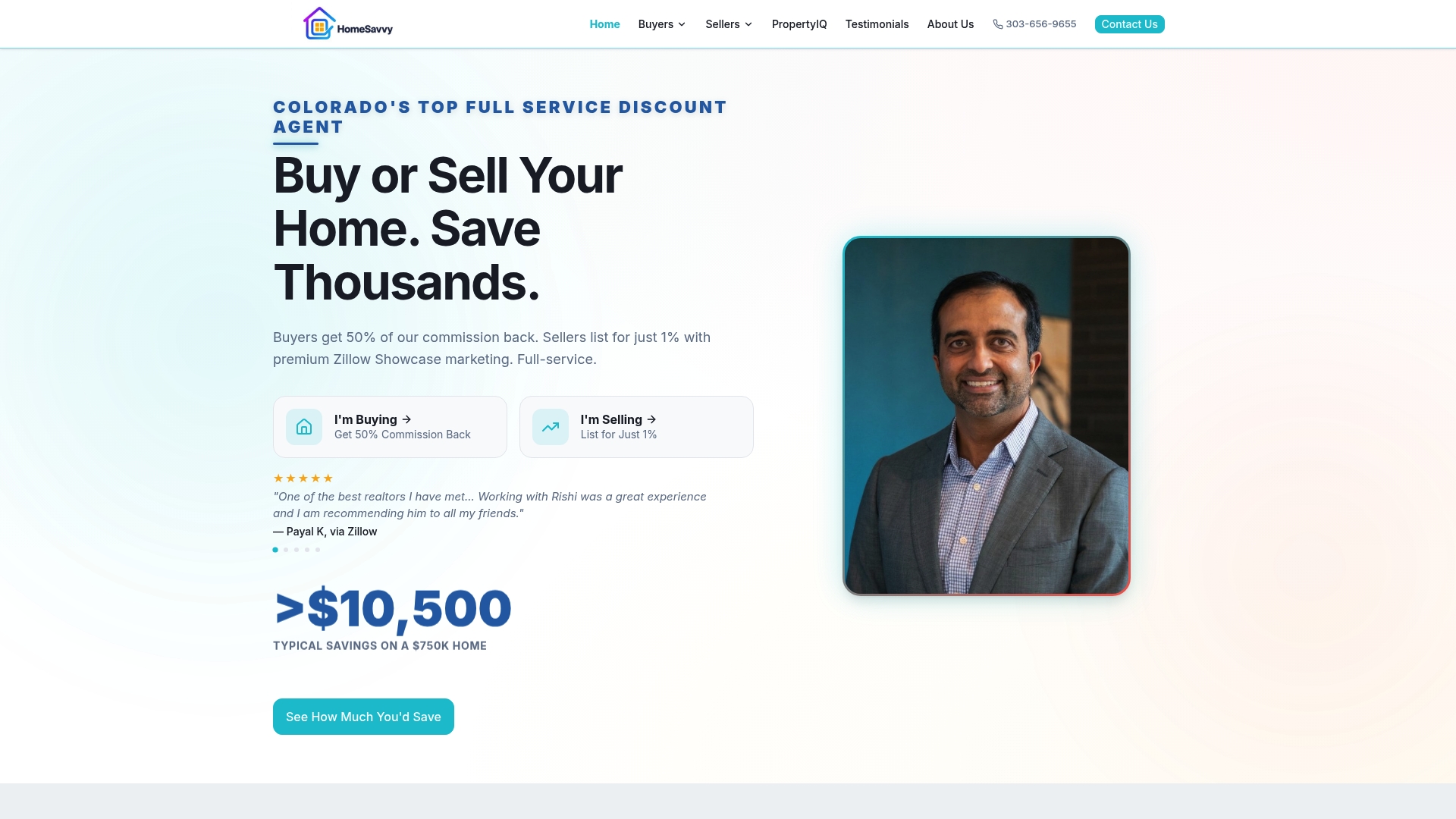
Homesavvycolorado gives buyers access to the PropertyIQ AI valuation tool to understand exactly what a home is worth before you make an offer. That accuracy protects you from overpaying on price and on appraisal-related fees. For sellers, our commission rebate program significantly reduces what you pay at the table. We list homes for as little as 1%, compared to the traditional 2.5% to 3% listing commission, which means thousands more in your pocket at the end of a transaction. Get a free estimate and see how much you can save before your next closing.
FAQ
What are typical closing costs for buyers in Colorado?
Buyers in Colorado typically pay 2% to 5% of the home purchase price in closing costs, covering loan origination, appraisal, title insurance, and prepaid expenses like property taxes and homeowner's insurance.
How much do sellers pay in closing costs in Colorado?
Sellers usually pay 6% to 10% of the sale price, with agent commissions accounting for the majority. On a $540,000 home, commissions alone can reach $27,000 to $32,400.
What is Colorado's transfer tax?
Colorado charges just $0.01 per $100 of the sale price in documentary transfer tax, one of the lowest rates in the country. That equals $40 on a $400,000 home.
Can first-time buyers get help with closing costs in Colorado?
Yes. CHFA programs offer up to 3% to 4% of the mortgage amount in grants or second mortgages, and the NeighborhoodLIFT program provides up to $15,000 in down payment and closing cost assistance in qualifying counties.
Are closing costs negotiable in Colorado?
Many are. Loan origination fees, title services, and real estate commissions can all be reduced through comparison shopping and direct negotiation. Buyers can also request seller concessions to offset their upfront costs.