
Smart home selling strategies are methods that maximize a property's sale price by presenting, documenting, and transferring its technology in ways that build buyer confidence and justify premium offers. Sellers who treat smart devices as documented fixtures rather than afterthoughts consistently attract stronger offers and fewer post-closing disputes. Brands like Nest, Ring, Kwikset, and Lockly have moved from novelty to expectation in buyer checklists, and Matter-compatible ecosystems are now a baseline signal of a well-maintained home. The examples of smart home selling strategies below are drawn from 2026 industry research and are built for sellers who want practical execution, not theory.
1. Examples of smart home selling strategies: start with a full device inventory
The single most effective first step is cataloging every smart device in the home before the listing appointment. ASREB's 2026 checklist recommends organizing devices by category: smart locks, thermostats, cameras, speakers, and lighting controls. This builds immediate trust with buyers and eliminates the ambiguity that stalls negotiations.
The inventory must also distinguish fixtures from personal property. A Nest Learning Thermostat wired into the HVAC system is a fixture. A portable Amazon Echo Dot is personal property. Sellers who blur this line create disputes at closing that delay or kill deals.
Legal disclosure is the third layer. Any device capable of recording audio or video, including Ring doorbells and indoor cameras, requires explicit disclosure in most states. Buyers have a right to know what has been recording in the home, and sellers who proactively address this reduce hesitation before it forms.
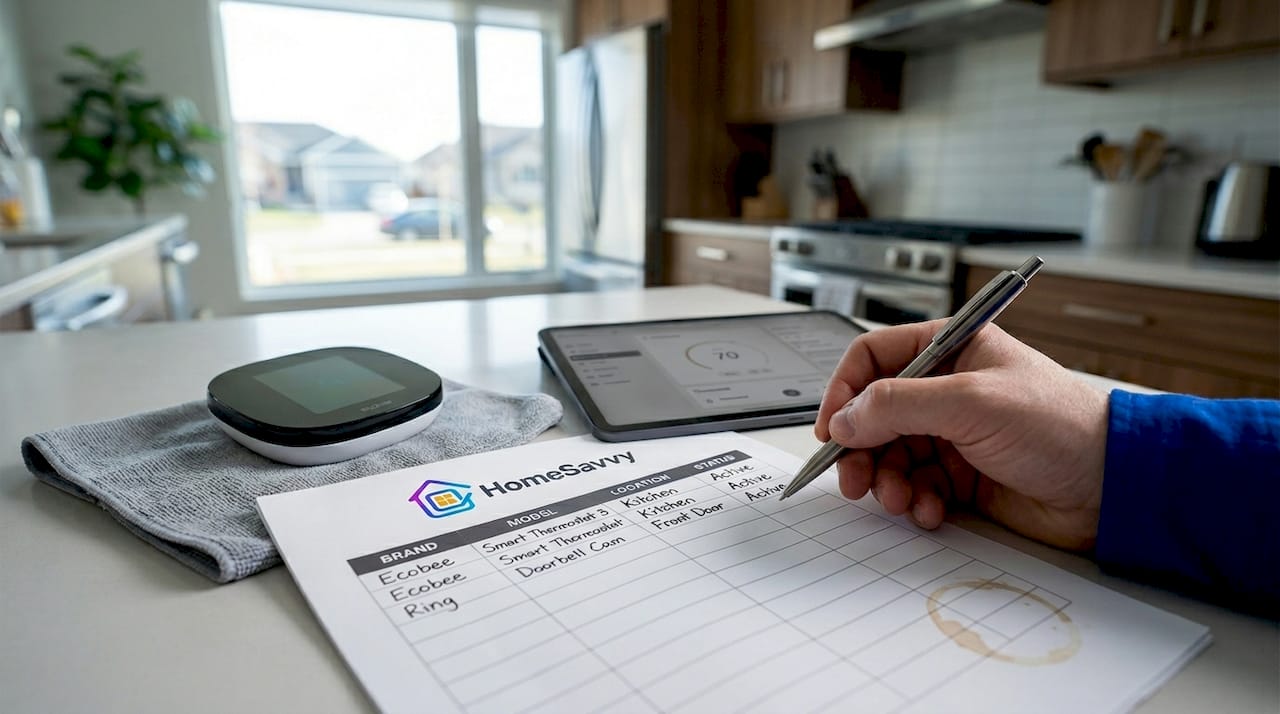
Pro Tip: Create a one-page device inventory sheet with brand, model, location, and "stays or goes" status for each item. Hand it to your agent before photos are taken so it can be referenced in the listing.
2. How to execute a clean digital handoff
A clean digital handoff means the buyer receives a home where every smart device is reset, every seller account is removed, and every subscription is either canceled or transferred. ASREB advises sellers to treat this as a formal checklist, not an afterthought. Devices that still carry seller credentials create privacy risks and post-closing disputes that damage trust and sometimes trigger legal action.
Follow this sequence before closing:
- Factory reset every smart device staying with the home, including thermostats, cameras, doorbells, and smart speakers.
- Remove all shared user permissions from apps like the Google Home app, Ring app, or Apple Home.
- Cancel or formally transfer security monitoring subscriptions such as Ring Protect or ADT Command.
- Reset all smart lock master codes on devices like Kwikset Aura Reach or Lockly NFC models.
- Provide the buyer with printed setup instructions, app download links, and any remaining warranty documentation.
- Change the Wi-Fi network name and password, and include the new credentials in the buyer's handoff packet.
Pro Tip: Record a short screen-capture video walking through each device reset. Buyers who receive this video report significantly higher satisfaction and are less likely to call with post-closing tech questions.
3. Framing tech benefits around lifestyle, not specs
Buyers do not buy a Z-Wave protocol. They buy the experience of never fumbling for keys at 11 p.m. Forbes 2026 research confirms that affluent buyers respond to "stealth" smart tech narratives centered on lived outcomes and reduced mental load, not visible gadgets or technical specifications. This shift in framing is one of the most underused smart home marketing ideas available to sellers today.
Practical framing examples include:
- Smart locks: "Buyers can grant temporary access to movers or contractors without being home."
- Smart thermostats: "The home learns your schedule and adjusts automatically, cutting energy costs without any manual input."
- Smart lighting: "Scenes are pre-set for morning, evening, and away modes, so the home feels right the moment you walk in."
- Security cameras: "Live monitoring is accessible from any phone, giving owners peace of mind whether they are at work or traveling."
"The most effective smart home narratives remove friction from daily life. When a buyer can picture themselves benefiting from the technology on day one, the device stops being a feature and becomes a reason to buy." — Forbes Business Council, 2026
NAR's CES 2026 coverage reinforces this point directly: simplified ecosystems and smart locks are now core tools that reduce buyer friction, not premium add-ons. Sellers who lead with outcomes close faster.
4. Using smart lock access as a showing tool
Smart locks like the Kwikset Aura Reach and Lockly NFC models do more than secure a home. They actively improve the showing experience. NAR's CES 2026 report identifies these locks as key selling points because they simplify buyer access workflows and reduce showing friction for agents and sellers alike.
Sellers can issue temporary access codes to buyer agents, inspectors, and appraisers without handing over physical keys. This signals to buyers that the home is tech-forward and professionally managed. During showings, the seller's agent can demonstrate the lock's app interface in real time, turning a functional device into a live sales moment.
After an offer is accepted, the smart lock becomes a move-in convenience tool. The seller can transfer app ownership to the buyer at closing, giving them immediate digital control of their new home before they even receive a physical key. This detail, small as it sounds, consistently generates positive buyer feedback and referrals.
5. Bundling smart home tech to increase perceived value
Smart home bundles are curated packages of devices included with the home sale to increase perceived value and justify a higher asking price. Flipping.store's 2026 analysis shows that bundles combining Wi-Fi routers, smart speakers, and chargers can lift sale price by up to 1.5% with minimal seller cost. That is a meaningful return on a few hundred dollars of hardware.
Three bundle tiers work well in practice:
| Bundle Tier | Devices Included | Positioning |
|---|---|---|
| Core | Smart thermostat, smart lock, Wi-Fi router | "Move-in ready, no setup required" |
| Value | Core + smart doorbell, smart speaker, USB-C charging stations | "Connected home from day one" |
| Premium | Value + smart lighting system, security camera package, Matter hub | "Full smart home ecosystem included" |
Pricing strategy matters as much as the bundle itself. Anchor each bundle to its combined MSRP in the listing description. A $600 bundle described as "$600 in smart home technology included" reads very differently to a buyer than a vague mention of "smart features." The MSRP anchor creates a concrete value reference that buyers carry into their offer calculations.
Pro Tip: Photograph every bundled device together before staging. Include this photo in the listing and in the feature sheet. Visual proof of the bundle's scope increases perceived value more than any written description alone.
Professional transfer documentation and buyer support after closing further boost bundle confidence. Sellers who include a printed tech guide with each bundle report fewer buyer complaints and stronger online reviews.
6. Creating a smart home feature sheet for your listing
A Smart Home Snapshot is a one-page document that lists every smart device in the home with its brand, model, platform compatibility, and current status. Tech & Real Estate 2026 identifies this document as a direct driver of buyer decision speed. Buyers who receive specific brand and model information make faster, more confident offers than those who receive vague descriptions.
The feature sheet should include:
- Device name, brand, and model number (e.g., Google Nest Learning Thermostat, 4th Gen)
- Platform compatibility (Works with Google Home, Amazon Alexa, Apple HomeKit, Matter)
- Location in the home
- Subscription status (active, transferable, or canceled at closing)
- QR codes linking to setup videos or manufacturer support pages
Pair the feature sheet with immersive listing media. Tech & Real Estate 2026 recommends photos of control panels, exterior cameras in context, and AI-generated staging images that show ambient lighting scenes and automation effects in action. Buyers who see the technology working in a staged environment engage more deeply with the listing and spend more time on the property page.
When writing the listing description itself, lead with the top two or three smart features in the first sentence. "This home includes a Google Nest thermostat, Ring Video Doorbell Pro, and a Kwikset smart lock system" outperforms "smart home features throughout" in both search visibility and buyer recall. For additional guidance on how to present your home's features effectively, reviewing Colorado home staging practices can sharpen your overall listing presentation.
7. Addressing buyer concerns about privacy and compatibility
Privacy is the most common objection buyers raise about smart home technology, and sellers who address it proactively remove a significant barrier to closing. ASREB's disclosure guidance is direct: sellers must disclose all recording-capable devices, confirm that stored recordings have been deleted, and document the reset process in writing. Buyers who receive this documentation in advance are far less likely to raise privacy concerns during inspection or negotiation.
Compatibility concerns are the second most common objection. A buyer who uses Apple devices may hesitate over a home built around Amazon Alexa. The solution is to feature Matter-compatible devices prominently, since Matter is the cross-platform standard supported by Apple, Google, Amazon, and Samsung. Listing a device as "Matter-compatible" signals to buyers that it will work with whatever ecosystem they already own.
Sellers should also address Wi-Fi infrastructure directly. A home with a mesh Wi-Fi system from Eero or Google Nest Wifi Pro signals that the smart home infrastructure is built to support multiple devices without dead zones. Including the router in the listing inventory, and noting its coverage capacity, removes a practical concern that tech-savvy buyers often raise before making an offer.
Key takeaways
Effective smart home selling combines transparent disclosure, clean device handoffs, outcome-focused marketing, strategic bundling, and detailed listing documentation to attract stronger offers and reduce closing friction.
| Point | Details |
|---|---|
| Inventory every device first | Catalog all smart devices by category before listing to build buyer trust and prevent disputes. |
| Execute a full digital handoff | Factory reset devices, remove accounts, and transfer subscriptions before closing to eliminate privacy risks. |
| Frame benefits around outcomes | Lead with lifestyle results like convenience and security rather than device specs or brand names alone. |
| Bundle devices with MSRP anchors | Tiered bundles with documented retail value can lift sale price by up to 1.5% at minimal cost. |
| Use a Smart Home Snapshot sheet | Specific brand, model, and compatibility details speed buyer decisions and reduce hesitation. |
Why tech transparency is the real selling strategy
Most sellers focus on what technology to include. The sellers who actually close faster and at higher prices focus on how clearly they communicate it. I have seen listings with $15,000 in smart home upgrades sit on the market because the agent described them as "smart features throughout." I have also seen a $400 bundle of a Nest thermostat, Ring doorbell, and Kwikset lock generate three competing offers because the seller handed every buyer a one-page feature sheet at the door.
The mistake I see most often is treating smart home tech like a bonus rather than a documented asset. Buyers in 2026 are not impressed by gadgets. They are impressed by sellers who have done the work: reset the devices, transferred the subscriptions, written down the passwords, and explained what everything does in plain language. That level of preparation signals that the entire home has been maintained with the same care.
The other underrated tactic is using the smart lock during showings as a live demonstration. Agents who pull out their phone, tap the app, and unlock the front door in front of a buyer are not just showing a feature. They are showing that the technology works, that it is simple, and that the buyer will be able to use it on day one without a learning curve. That moment of friction removal is worth more than any spec sheet.
— Rishi
How Homesavvycolorado helps you sell smarter for less
Homesavvycolorado combines AI-powered property insights with full-service agent support built specifically for Colorado sellers who want to maximize their net proceeds. If your home includes smart technology, Homesavvycolorado's agents know how to document, market, and present those features to attract stronger offers. The platform's discount listing service charges sellers just 1% to list, which means more of your sale price stays with you at closing. Sellers can also use the PropertyIQ valuation tool to price smart home upgrades competitively against current market data. If you are ready to list, Homesavvycolorado makes the process straightforward and cost-effective.
FAQ
What smart home devices add the most value when selling?
Smart locks, video doorbells, and programmable thermostats from brands like Nest, Ring, and Kwikset consistently generate the strongest buyer response because they address security, access, and energy costs directly. Bundling these with a mesh Wi-Fi router amplifies their perceived value.
Do I have to disclose smart home recording devices when selling?
Yes. Any device capable of recording audio or video, including Ring doorbells and indoor cameras, requires explicit disclosure to buyers in most states. ASREB's 2026 guidelines recommend documenting the reset and deletion of stored recordings in writing before closing.
How do I transfer smart home devices to the buyer?
Factory reset every device, remove all seller accounts and shared permissions, cancel or transfer active subscriptions, and provide the buyer with a printed handoff packet that includes setup instructions, app links, and new Wi-Fi credentials.
Can smart home bundles actually increase my sale price?
Yes. Tiered bundles anchored to their combined MSRP can increase sale price by up to 1.5% according to Flipping.store's 2026 analysis. The key is documenting the bundle's retail value clearly in the listing so buyers can calculate the benefit into their offer.
What is a Smart Home Snapshot and do I need one?
A Smart Home Snapshot is a one-page feature sheet listing every smart device with its brand, model, platform compatibility, and subscription status. Tech & Real Estate 2026 identifies it as a direct driver of faster buyer decisions, making it one of the most cost-effective listing tools available to sellers.