
The home sales cycle is the end-to-end process that moves a property from initial listing through final closing. For Colorado sellers, that full cycle spans roughly 55 to 70 days in typical market conditions. Buyers generally take longer, anywhere from 60 to 120 days, because house hunting and mortgage underwriting add complexity. Whether you are listing a Denver bungalow or searching for a home in Fort Collins, understanding each phase of the real estate sales cycle gives you a real advantage. This guide breaks down every stage, explains what drives delays, and shows you how to protect your deal from the most common failure points.
What is the home sales cycle, stage by stage?
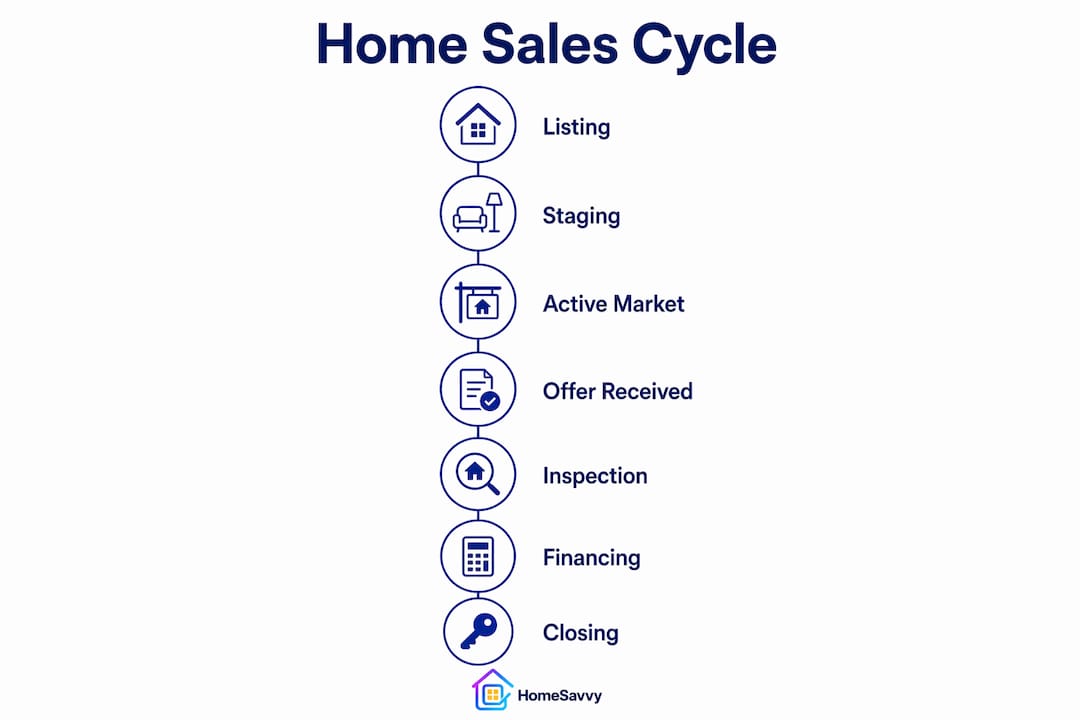
The real estate sales cycle is a predictable, 8-stage process, not a black box. Managing each stage carefully reduces deal failures. Here is what each phase looks like in practice for Colorado buyers and sellers.
- Lead contact. A seller connects with an agent, or a buyer reaches out to a lender or real estate professional. This stage sets the tone for everything that follows.
- Consultation and needs discovery. The agent learns the seller's goals, timeline, and property details, or works with a buyer to define their must-haves, budget, and preferred neighborhoods.
- Qualification. Buyers get pre-approved by a lender. Sellers confirm their equity position and readiness to list. Skipping this step is the fastest way to waste weeks.
- Listing and active search. Sellers prep the home, stage it, and go live on the MLS. Buyers begin touring properties. This phase typically runs 20 to 60 days depending on market pace.
- Offer and negotiation. Buyers submit offers. Sellers review terms, price, contingencies, and closing timelines. Multiple-offer situations are common in Colorado's competitive markets.
- Under contract. Both parties sign a purchase agreement. The clock starts on contingency deadlines, inspection windows, and financing timelines.
- Inspection and appraisal. A licensed inspector examines the property. The buyer's lender orders an appraisal. This is the phase where most deals face their biggest stress test.
- Closing. Title companies coordinate final paperwork, funds transfer, and deed recording. Financed buyers typically close in 30 to 45 days post-contract.
For sellers, the most time-intensive phases are staging and the active listing period. For buyers, financing and inspection contingencies consume the most calendar time.
Pro Tip: Get your pre-approval letter from a Colorado lender before you tour a single home. Sellers in Denver and Boulder routinely reject offers from buyers who cannot show proof of financing upfront.

How do market conditions and financing affect the timeline?
Market speed and buyer financing type are the two biggest variables in any home sale timeline. Understanding both helps you set realistic expectations before you list or make an offer.
In a fast Colorado market, well-priced homes receive offers within days. Homes priced at or just below market value typically receive offers within the first two weeks. Overpriced homes, by contrast, can sit for 60 to 90 days before sellers reduce the price. That delay signals weakness to buyers and often leads to lower final offers.
Financing type shapes the closing timeline just as much as market pace. The table below shows the key differences.
| Buyer Type | Typical Closing Time | Key Advantage | Main Risk |
|---|---|---|---|
| Cash buyer | 14–21 days post-contract | No underwriting or appraisal delays | Fewer buyers in this category |
| Conventional loan | 30–45 days post-contract | Widely accepted by sellers | Appraisal gaps can stall closing |
| FHA or VA loan | 35–50 days post-contract | Lower down payment requirements | Stricter property condition standards |
| Construction loan | 45–60+ days | Covers new builds and major renovations | Complex draw schedules add time |
Cash buyers close faster because they skip mortgage underwriting and appraisal requirements entirely. That speed is a genuine competitive advantage in Colorado's high-demand markets like Colorado Springs and the Denver metro.
Appraisal delays are one of the most common bottlenecks in financed transactions. If the appraised value comes in below the agreed purchase price, the buyer, seller, or both must renegotiate or the deal falls apart. Sellers who price accurately from day one avoid this scenario almost entirely.
Pro Tip: Ask your Colorado listing agent for a comparative market analysis before you set your price. Accurate pricing from the start cuts your days on market and reduces the risk of an appraisal gap at closing.
What are the biggest risks in the home sales cycle?
The inspection contingency period, typically days 3 through 10 after contract acceptance, is the most critical risk stage where deals fall through. Major findings, like a failing roof, foundation cracks, or outdated electrical panels, often lead to renegotiation or outright termination. Colorado's older housing stock in neighborhoods like Capitol Hill or Wash Park makes this phase especially important.
Here are the most common failure points in the home sales cycle and how to prevent them:
- Inspection surprises. Sellers who order a pre-listing inspection catch problems before buyers do. Fixing issues in advance removes the most common reason deals collapse.
- Financing failure. Buyers who get fully underwritten pre-approval, not just pre-qualification, face far fewer last-minute loan denials. Lenders like Fairway Independent Mortgage and Guild Mortgage offer full underwriting pre-approvals in Colorado.
- The nurturing void. The gap between initial contact and a signed contract is the most variable part of the sales cycle and the main cause of stalling transactions. Consistent follow-up and clear communication between agents, buyers, and sellers keep deals moving.
- Poor documentation. Sellers who prepare repair records, HOA documents, and disclosure forms in advance reduce last-minute delays and speed up the handoff to title companies and lenders.
- Wrong listing strategy. Choosing between a full-service agent, a flat-fee MLS listing, or FSBO has real consequences. You can review Colorado listing options to understand which approach fits your situation and risk tolerance.
Home buying is an emotional process involving multiple stakeholders. Deals that survive inspection and financing hurdles often do so because agents and clients maintained clear, calm communication throughout. Emotional decisions made under pressure, like accepting a low offer out of fear or walking away from a deal over a minor repair, are the silent killers of otherwise solid transactions.
Pro Tip: Colorado requires sellers to complete a Seller's Property Disclosure form. Fill it out completely and honestly before you list. Incomplete disclosures are a leading cause of post-inspection disputes and deal terminations.
How does the cycle differ for new builds vs. resale homes?
The home sales process looks very different depending on whether you are buying a custom build or an existing resale property. The timelines, financing structures, and inspection requirements diverge significantly.
Custom home builds carry sales cycles of 6 to 12 months, driven by lot acquisition, design approvals, permitting, and construction phases. In Colorado, builders in areas like Castle Rock, Erie, and Broomfield often require buyers to use their preferred lenders and sign design contracts months before breaking ground. That adds layers of complexity that resale transactions simply do not have.
| Property Type | Typical Sales Cycle | Financing Complexity | Inspection Scope |
|---|---|---|---|
| Custom new build | 6–12 months | High (construction loans, draw schedules) | Phase inspections during build |
| Spec new home | 60–90 days | Moderate (standard mortgage, builder incentives) | Final walkthrough plus new home inspection |
| Resale home | 55–70 days (seller) / 60–120 days (buyer) | Standard (conventional, FHA, VA) | Full home inspection plus radon, sewer scope |
Spec homes, properties a builder constructs before finding a buyer, offer a middle path. They close faster than custom builds because construction is already underway or complete. Buyers still get a new home warranty and modern finishes, but without the 12-month wait.
Resale homes in Colorado close fastest when sellers are prepared and priced correctly. The closing process for resale transactions involves title companies, lenders, and inspectors working on overlapping 30 to 45-day timelines post-contract. Coordination between these parties is what separates smooth closings from chaotic ones.
Effective transaction management is deadline-driven coordination across lenders, inspectors, and title companies. Missing one deadline, like a financing contingency removal date, can void the entire contract. Buyers and sellers who work with experienced Colorado agents avoid these traps because their agents track every deadline on their behalf.
Key takeaways
The home sales cycle is a structured, stage-by-stage process that Colorado buyers and sellers can manage successfully by understanding timelines, financing types, and the inspection phase as the highest-risk point.
| Point | Details |
|---|---|
| Seller timeline is 55–70 days | Active listing plus a 30–45-day closing period defines the typical seller cycle. |
| Buyer timeline runs longer | Financing, house hunting, and contingencies push buyer cycles to 60–120 days. |
| Inspection is the top risk phase | Days 3–10 post-contract are where most Colorado deals collapse or get renegotiated. |
| Pricing accuracy drives speed | Homes priced at market value receive offers within two weeks; overpriced homes stall for months. |
| New builds take far longer | Custom construction adds 6–12 months versus the 2–3 months typical for resale transactions. |
What i've learned about the colorado sales cycle after years in this market
Most buyers and sellers walk into a transaction thinking the hard part is finding the right home or the right buyer. The real challenge is managing the 45 days after the contract is signed.
Colorado's market has its own personality. In Denver, Boulder, and Fort Collins, multiple-offer situations can compress the negotiation phase to 48 hours. In rural markets like Pueblo or the Western Slope, deals can sit in the inspection phase for weeks because qualified inspectors are harder to schedule. One size does not fit all here.
The biggest mistake I see sellers make is treating the listing as the finish line. Getting an offer is not the goal. Getting to a clean closing is. That means having your disclosures ready, your repair history documented, and your agent tracking every contingency deadline. Sellers who treat the post-contract phase with the same energy they gave to staging and photography close faster and with fewer surprises.
For buyers, the emotional pull of a home is real. I have watched buyers talk themselves into waiving inspection contingencies in hot markets and regret it deeply when a $15,000 furnace problem surfaces after closing. Stay objective. Use data. Work with an agent who will tell you the truth, not just what you want to hear.
The Colorado real estate sales cycle rewards preparation and punishes impatience. Know your phase, know your deadlines, and communicate clearly with every party involved. That is the formula that works.
— Rishi
How Homesavvycolorado makes the sales cycle work for you
Understanding the home sales cycle is one thing. Having the right tools and support to execute it is another. Homesavvycolorado combines AI-powered property data with full-service agent support so Colorado buyers and sellers move through each phase with confidence.
Sellers can use the PropertyIQ AI valuation tool to price their home accurately from day one, cutting days on market and reducing appraisal gap risk. Homesavvycolorado also offers a 1% listing fee service that gives sellers full-service agent representation at a fraction of the typical cost. Buyers benefit from significant commission rebates at closing. Whether you are listing in Denver or buying in Colorado Springs, Homesavvycolorado gives you the data and the expertise to close smarter.
FAQ
How long does the home sales cycle take in colorado?
The typical seller cycle in Colorado runs 55 to 70 days, covering the active listing period plus a 30 to 45-day closing. Buyers generally take 60 to 120 days due to financing and search time.
What stage of the home sales cycle has the highest risk?
The inspection contingency period, days 3 through 10 after contract acceptance, is the highest-risk stage. Major findings during this window frequently lead to renegotiation or deal termination.
Do cash buyers move through the sales cycle faster?
Yes. Cash buyers typically close within 14 to 21 days after an accepted offer because they skip mortgage underwriting and appraisal requirements entirely.
How does overpricing affect the home sales cycle?
Overpriced homes often sit on the market for 60 to 90 days before sellers reduce the price. That delay signals weakness to buyers and typically results in lower final offers than accurate pricing would have generated.
How long does a new construction home sale take in colorado?
Custom builds in Colorado generally take 6 to 12 months from contract to closing due to lot acquisition, design approvals, and construction timelines. Spec homes and resale properties close much faster, typically within 60 to 90 days.