

Proprietary real estate data is defined as exclusive, firm-specific datasets that are not available through public portals like Zillow or the MLS. The advantages of proprietary real estate data over public sources are concrete: granular submarket analysis, predictive asset management, and targeted marketing that public data simply cannot replicate. Platforms like Propic's Claire AI and tools built by firms like Homesavvycolorado show how combining exclusive data with AI creates a real estate data competitive edge that compounds over time. For investors and agents operating in 2026, the question is no longer whether to use proprietary data. The question is how fast you can build it.
1. How does proprietary data improve submarket analysis?
Proprietary data reveals what national reports hide. Average national inventory in H1 2026 sat at 731,069 homes with a 2.44-month absorption rate. That number tells you almost nothing about a specific Denver zip code or a Colorado Springs submarket where inventory may be tightening or flooding simultaneously.
Localized proprietary datasets track metrics like neighborhood-level absorption rates, days-on-market by street cluster, and price cut frequency. These signals let you spot buying opportunities before they appear on any public feed. The difference between acting in week one and week four of a listing cycle can mean tens of thousands of dollars in negotiation leverage.

The most valuable proprietary data also tracks relist detection to avoid overestimating true inventory. A home that fails to sell and relists under a new MLS number inflates public inventory counts. Proprietary systems flag that pattern automatically.
Key localized signals proprietary data captures that public portals miss:
- Ownership churn rates by block or building
- Active permit delays and lien history
- Vacancy proxies from utility and tax records
- Price cut velocity within a 30-day window
- Relist detection to strip false inventory inflation
Pro Tip: Before trusting any public inventory figure, check whether your data source filters for relistings. Unfiltered MLS data regularly overstates available supply by a meaningful margin in high-turnover submarkets.
2. In what ways does proprietary data optimize asset management?
66% of real estate investors cite asset management as the area delivering the highest ROI from data infrastructure investment. That finding comes from an EY survey published in january 2026. It means that for most investors, the biggest payoff from data is not in finding deals. It is in running properties better after you own them.
Proprietary data creates what analysts call a single auditable truth for each asset. Instead of pulling rent rolls from one system, maintenance records from another, and market comps from a third, a consolidated proprietary dataset gives you one verified source. That prevents operational waste from manual re-verification and saves billable hours across property management teams.
The operational gains stack up in three specific areas:
- Leasing strategy: First-party tenant data reveals which unit types lease fastest and at what price points, letting you adjust rents before vacancies occur.
- Maintenance forecasting: Proprietary capex tracking flags aging systems by asset age and repair history, not just by calendar schedule.
- Vendor negotiation: Consolidated spend data across a portfolio gives you real leverage when renegotiating service contracts.
Merely having dashboards does not produce ROI. The firms that win are the ones with clear ownership of their data and defined use cases for every dataset they collect.
Pro Tip: Assign a data owner to each asset class in your portfolio. Without clear ownership, proprietary datasets go stale within six months and lose their operational value entirely.
3. What are the marketing advantages of using proprietary real estate data?
Targeted outreach using proprietary equity and life-event data dramatically reduces customer acquisition costs compared to mass marketing. BatchData's 2026 findings show that filtering for off-market and high-equity leads improves pipeline quality and lowers the cost per qualified contact. Sending the same mailer to an entire zip code is expensive and inefficient. Sending a targeted message to homeowners with 40% or more equity who have lived in their home for seven-plus years is a fundamentally different operation.
Proprietary life-event data adds another layer. Divorce filings, probate records, and job relocation data are all signals that a homeowner may be motivated to sell. Agents who access these signals through proprietary sources reach motivated sellers weeks before competitors who rely on public listing feeds.
| Factor | Mass marketing | Proprietary targeted outreach |
|---|---|---|
| Lead quality | Low to moderate | High intent, pre-qualified |
| Cost per contact | High, broad spend | Lower, filtered audience |
| Conversion rate | Low | Significantly higher |
| Data source | Public lists, zip codes | Equity, life-event, ownership data |
| Timing advantage | Reactive | Proactive, pre-market |
The Colorado real estate marketing strategies that consistently outperform rely on exactly this kind of data filtering. Agents who build proprietary contact databases with behavioral and financial overlays fill their pipelines with sellers who are already predisposed to act.
4. How does proprietary data combined with AI create a competitive edge?
AI tools are becoming commoditized fast. The software itself is no longer the advantage. The durable competitive edge comes from the exclusive, firm-specific data you feed into those tools. CRE experts consistently point to the combination of proprietary data and AI as the primary sustainable advantage in 2026, precisely because the data cannot be replicated by a competitor who buys the same software license.
Propic's Claire AI demonstrates this principle clearly. Claire retains memory of client interactions, including property rejections, price sensitivity signals, and negotiation patterns. That interaction memory creates predictive intelligence that no public data source can replicate. A competing agent using the same AI platform but without that client history starts every deal from zero.
The industry is bifurcating along a clear line. Firms controlling closed proprietary databases are pulling ahead of firms relying on open public data. Data control now outweighs brand recognition as a competitive factor in many markets.
The challenge is data readiness. Only 8% of firms are genuinely ready to deploy AI effectively because of governance and data quality gaps. Dumping unstructured records into a generic AI tool does not create an advantage. It creates leakage risk.
What separates data-ready firms from the rest:
- Structured, labeled datasets with consistent field definitions
- Clear governance policies on data access and update frequency
- Defined AI use cases tied to specific business outcomes
- Regular audits to remove stale or duplicate records
Understanding the real estate data analytics advantages that come from well-governed data is the starting point for building an AI strategy that actually delivers results.
Key takeaways
Proprietary real estate data delivers its highest value when it is well-governed, actively maintained, and connected to specific business outcomes rather than treated as a passive reporting tool.
| Point | Details |
|---|---|
| Submarket precision | Proprietary data reveals localized inventory and absorption signals that national reports cannot show. |
| Asset management ROI | 66% of investors report the highest data ROI from asset management, not deal sourcing. |
| Marketing efficiency | Filtering by equity and life-event data lowers acquisition costs and raises lead quality. |
| AI requires exclusive data | AI tools are commoditized; the advantage comes from the firm-specific data you feed them. |
| Data readiness is the barrier | Only 8% of firms are ready for effective AI deployment due to governance gaps. |
Why data control is the real dividing line in 2026
The conventional view is that better technology separates top-performing real estate firms from average ones. I think that framing is already outdated. The firms I watch closely are not winning because they have better software. They are winning because they have data that no competitor can access or replicate.
Data control is the actual dividing line. A firm that has tracked every client interaction, every rejected property, and every lease renewal pattern for five years holds institutional knowledge that cannot be bought on a data marketplace. That knowledge compounds. An agent who has been building a proprietary CRM for three years knows things about buyer behavior in their market that a new entrant with better tools simply cannot know yet.
The mistake I see most often is investing in AI platforms before the underlying data is clean and governed. Feeding a sophisticated AI tool with inconsistent, duplicated, or stale records does not produce better decisions. It produces confident-sounding wrong answers. The data readiness gap is real, and it is the reason most firms are not getting the ROI they expect from AI investments.
My recommendation is simple: invest in data quality before you invest in data technology. Clean your records, assign ownership, and define what each dataset is supposed to tell you. The technology will work far better once the foundation is solid.
— Rishi
Homesavvycolorado's PropertyIQ puts proprietary data to work for you
Homesavvycolorado built PropertyIQ specifically for Colorado investors and agents who want the benefits of real estate data without building a data infrastructure from scratch.
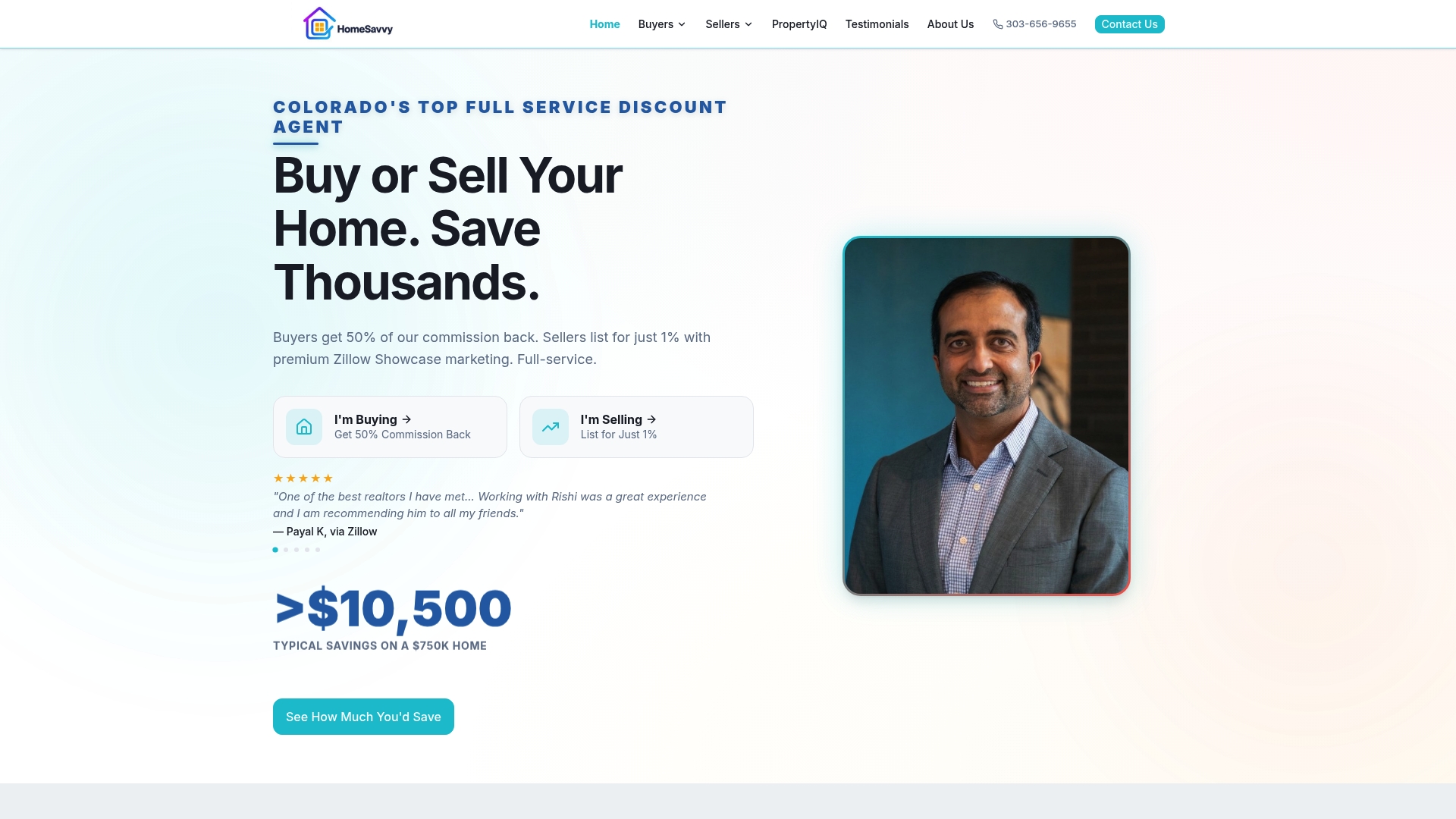
PropertyIQ combines AI-powered valuation models with proprietary Colorado market data to give you real-time home value estimates, submarket trend analysis, and investment signals in one place. The platform pulls from transaction histories, local absorption rates, and listing behavior data that public portals do not surface. Whether you are evaluating a purchase, pricing a listing, or tracking a portfolio, the PropertyIQ AI valuation tool gives you the data depth that serious decisions require. Homesavvycolorado also offers buyers significant commission rebates and sellers reduced listing fees, so the data advantage comes with real cost savings built in.
FAQ
What is proprietary real estate data?
Proprietary real estate data is exclusive, firm-specific information not available through public sources like the MLS or Zillow. It includes transaction histories, client interaction records, off-market signals, and localized market metrics collected and controlled by a single firm.
How does proprietary data give investors a competitive edge?
Proprietary data enables granular submarket analysis, predictive asset management, and targeted marketing that public data cannot support. Firms with exclusive datasets can identify opportunities and risks earlier than competitors relying on shared public feeds.
Why does AI need proprietary data to be effective?
AI tools are widely available and increasingly similar in capability. The advantage comes from the exclusive data you train them on. Firm-specific interaction data creates predictive intelligence that generic AI tools fed with public data cannot replicate.
What is the biggest barrier to using proprietary data effectively?
Data readiness is the primary barrier. Only 8% of real estate firms have the governance and data quality needed for effective AI deployment. Without clean, structured, and well-labeled data, even advanced AI tools produce unreliable outputs.
How does proprietary data reduce real estate marketing costs?
Filtering outreach by equity levels, ownership duration, and life-event signals targets only high-intent contacts. BatchData's 2026 research confirms this approach lowers acquisition costs and improves pipeline quality compared to broad, zip-code-level mass marketing.