

Full-service real estate agents are licensed professionals who manage every phase of a property transaction, from the first showing preparation to the final closing signature. In Colorado, the role of full-service agents has grown more defined and legally structured, particularly with new 2026 regulations reshaping how agents handle client information inside brokerages. Whether you are buying your first home in Denver or selling a property in Colorado Springs, understanding what a full-service agent actually does, and how that differs from a limited-service alternative, directly affects your outcome and your stress level.
What do full-service agents do for sellers and buyers?
Full-service agents, known in the industry as full-service realtors or full-representation agents, handle a documented range of tasks that go well beyond placing a listing on the MLS. The National Association of Realtors (NAR) frames this work as a repeatable, client-centered process that begins long before a buyer walks through the door.
Pre-showing preparation and home readiness
Before every showing, a full-service agent guides sellers through a 15-task preparation checklist that covers clearing counters, neutralizing odors, disabling alarms, and staging each room for maximum buyer appeal. This is not a one-time exercise. It is a repeatable workflow that keeps the home consistently buyer-ready throughout the listing period. Sellers who skip this process often lose offers to competing homes that feel more move-in ready, even at the same price point.
Marketing beyond the MLS
A full-service agent builds a multi-channel marketing plan that includes professional photography, targeted social media advertising, email outreach to buyer agents, and open house coordination. This approach maximizes property exposure and generates competitive offers rather than a single low bid. Sellers working with limited-service agents often handle this marketing themselves, which requires time, skill, and local market knowledge most homeowners simply do not have.

Negotiation and transaction coordination
Full-service agents manage negotiations from the initial offer through counteroffers, inspection responses, and final contract terms, protecting your interests at every step. Their expertise reduces the risk of costly contract errors and keeps deadlines on track. For buyers, this means knowing when to push back on price and when to accept terms that protect the deal.
Here is a summary of the core functions full-service agents perform:
- Pre-listing consultation: Pricing strategy, comparable market analysis, and home condition assessment
- Showing preparation: Repeatable checklist-based readiness for every buyer visit
- Professional marketing: Photography, staging coordination, MLS, social media, and agent outreach
- Showing management: Scheduling, access coordination, and feedback collection
- Offer and negotiation management: Evaluating offers, structuring counteroffers, and advising on terms
- Transaction coordination: Managing paperwork, deadlines, inspections, appraisals, and lender communication
- Closing support: Final walkthrough coordination, title review, and settlement preparation
Pro Tip: Ask any agent you interview to walk you through their specific showing preparation process. Agents who describe a documented, repeatable system are far more likely to deliver consistent results than those who rely on general experience.
How Colorado's 2026 confidentiality rules changed agent operations
Colorado's real estate regulations shifted significantly on January 1, 2026. Under the new rule, brokers must obtain informed consent before sharing confidential client information with employing or supervising brokers inside the same brokerage. This is a meaningful change from prior practice, where internal information sharing was largely assumed to be acceptable within a firm.
The practical impact on full-service teams is real. Transaction coordinators and supervising brokers who previously had open access to client files now require explicit client authorization before handling sensitive details. Brokerages have responded by building consent workflows into their onboarding process, presenting clients with clear disclosure forms at the start of every engagement.
"The 2026 Colorado informed consent rule highlights the balance full-service agencies must maintain between white-glove service and privacy compliance. Clients benefit from knowing their financial details, motivations, and negotiating positions are protected, even within the brokerage itself."
For you as a buyer or seller, this rule is actually a protection. Your agent cannot casually share your maximum budget or your urgency to sell with colleagues unless you have agreed to it in writing. Full-service agents who have adapted well to this change will present consent documentation clearly and explain what it covers before you sign anything. If an agent glosses over this step, that is a red flag about their attention to compliance detail.
The operational shift also affects how full-service teams are structured. Smaller brokerages with tightly integrated teams have had to formalize information barriers that previously did not exist. Larger firms have updated their transaction management software to flag consent status before any file is shared internally. Both adjustments add a layer of process, but they ultimately serve the client's interest in privacy and transparency.
What are the key benefits of working with a full-service agent in Colorado?
The benefits of full-service agents extend beyond convenience. They translate directly into financial outcomes, legal protection, and reduced transaction risk. Colorado's competitive markets, from Boulder to Fort Collins to the Denver metro, reward sellers and buyers who have professional representation managing every detail.
Full-service agents operate under NAR ethical duties that require them to act in the client's best interest and treat all parties fairly. This ethical framework is enforced through the Colorado Real Estate Commission and local realtor boards, giving you a formal recourse if your agent fails to perform. You can learn more about those protections through Colorado realtor board standards.
| Benefit | What it means for you |
|---|---|
| End-to-end transaction management | You handle nothing administrative. The agent manages every deadline, document, and vendor. |
| Professional pricing strategy | Agents use comparable sales data and market trends to price competitively, not emotionally. |
| Negotiation expertise | Agents protect your financial position through every offer, counteroffer, and inspection response. |
| Legal and ethical compliance | Agents follow NAR standards and Colorado law, reducing your exposure to contract disputes. |
| Marketing reach | Professional photography, staging, and multi-channel promotion attract more qualified buyers. |
For sellers specifically, the combination of strong showing preparation and professional marketing typically produces faster sales and stronger offers. For buyers, having an agent who manages buyer-side fiduciary duties means your interests are protected during inspection negotiations and appraisal gaps, two areas where unrepresented buyers frequently lose money.
How do full-service agents compare with limited-service or discount agents?
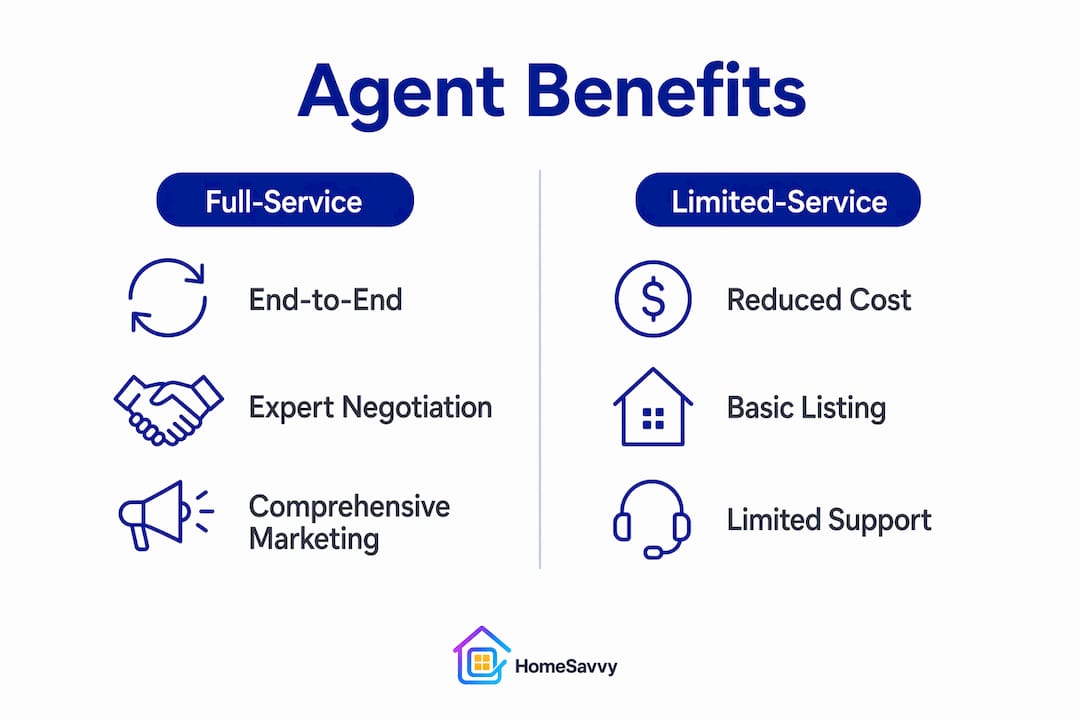
A limited-service agent, sometimes called a flat-fee or discount agent, provides a narrower set of services, typically MLS listing access and basic paperwork, while leaving marketing, showings, and negotiation to the client. The cost is lower upfront, but the client absorbs significant responsibility and risk.
Full-service agents provide a wider range of integrated, hands-on services that reduce client workload and increase the likelihood of a successful transaction. Limited-service agents narrow their duties, which can leave clients without support during the most critical phases of a deal, including inspection negotiations and appraisal disputes.
Here is where the difference becomes concrete:
- Showing management: Full-service agents schedule, coordinate, and follow up on every showing. Limited-service clients manage this themselves, which can mean missed appointments and lost buyers.
- Negotiation: Full-service agents handle every counteroffer with market knowledge and legal awareness. Limited-service clients negotiate directly, often without comparable data or contract experience.
- Marketing: Full-service agents invest in professional photography and targeted outreach. Flat-fee listings typically receive only MLS exposure.
- Compliance: Full-service agents track deadlines, disclosures, and legal requirements. Clients using limited-service agents are responsible for their own compliance, which creates real legal exposure.
The cost-versus-value trade-off depends on your situation. A seller with a highly desirable property in a fast-moving market might accept a flat-fee listing and still receive multiple offers. A buyer navigating a complex purchase with inspection issues or appraisal gaps needs full representation. The risk of missing a critical task, such as a disclosure deadline or a contract contingency, is where limited-service arrangements most often fail clients.
Pro Tip: Before choosing a limited-service option to save on commission, calculate the cost of one missed negotiation opportunity. In Colorado's market, a single poorly handled counteroffer can cost more than the commission savings.
Key takeaways
Full-service agents deliver measurable value by managing every phase of a Colorado real estate transaction, from showing preparation through closing, under a legally defined and ethically enforced framework.
| Point | Details |
|---|---|
| End-to-end service scope | Full-service agents handle preparation, marketing, negotiation, and closing, reducing client workload entirely. |
| 2026 consent compliance | Colorado agents must obtain written consent before sharing confidential client data within their brokerage. |
| NAR ethical standards | Full-service agents operate under enforceable ethical duties that protect client interests at every transaction stage. |
| Limited-service risk | Discount agents leave critical tasks to clients, creating gaps in negotiation, compliance, and marketing coverage. |
| Colorado market specificity | Local regulations and competitive conditions make full representation especially valuable in Colorado transactions. |
What I've learned about full-service agents after years in Colorado real estate
The most common mistake I see Colorado buyers and sellers make is treating agent selection as a cost decision rather than a capability decision. They compare commission percentages and stop there. What they miss is that the agent's ability to prepare a home correctly, price it accurately, and negotiate without flinching under pressure is where the real money is made or lost.
The 2026 confidentiality rule is a good example of why local expertise matters. Agents who understood the change early adapted their client onboarding process months in advance. Agents who ignored it scrambled to retrofit consent forms into deals already in progress. That gap in preparation reflects a broader pattern: the best full-service agents treat compliance as a client service, not a bureaucratic burden.
I have also noticed that sellers consistently underestimate the value of repeatable showing preparation. The NAR's 15-task checklist sounds basic until you realize most sellers stop following it after the first two weeks on market. The homes that sell fastest are the ones where the agent enforces the process every single time, not just for the first open house.
My advice: when you interview agents, ask them to describe their showing preparation system, their consent workflow under the 2026 rules, and their negotiation approach for inspection responses. The quality of those answers tells you more than any commission rate ever will.
— Rishi
How Homesavvycolorado supports your full-service real estate goals
Homesavvycolorado combines full-service agent support with proprietary technology to give Colorado buyers and sellers a real advantage in every transaction.

The platform's PropertyIQ AI valuation tool delivers real-time home value estimates grounded in local market data, so you enter every negotiation with accurate pricing intelligence rather than guesswork. For sellers, Homesavvycolorado offers reduced listing fees without sacrificing the full-service experience. For buyers, the commission rebate program returns a meaningful portion of the buyer's agent commission back to you at closing. Every client gets dedicated agent support, compliance guidance under Colorado's 2026 rules, and data tools that most traditional brokerages simply do not offer.
FAQ
What is the role of full-service agents in a home sale?
Full-service agents manage every stage of a home sale, including preparation, marketing, showings, negotiation, and closing coordination. Their scope covers both the strategic and administrative work required to complete a transaction successfully.
How do Colorado's 2026 rules affect full-service agent operations?
As of January 1, 2026, Colorado brokers must obtain written informed consent before sharing confidential client information with supervising or employing brokers inside the same brokerage. Full-service teams have adapted by adding consent documentation to their client onboarding workflows.
What is the difference between a full-service and a limited-service agent?
Full-service agents handle all transaction tasks on the client's behalf, while limited-service or flat-fee agents provide only basic services such as MLS listing access. Clients using limited-service agents are responsible for marketing, showings, and negotiation themselves.
Are full-service agents worth the cost in Colorado?
Full-service agents typically produce better pricing outcomes, faster sales, and fewer transaction errors than limited-service alternatives. In Colorado's competitive markets, the cost of a missed negotiation or compliance error usually exceeds the commission savings from a discount agent.
What ethical standards do full-service agents follow?
Full-service agents who are NAR members follow a Code of Ethics that requires them to act in the client's best interest and treat all parties fairly. These standards are enforced by the Colorado Real Estate Commission and local realtor boards.