

A real estate disclosure is a seller-provided written document declaring known material defects, hazards, and adverse facts about a property to enable informed buyer decisions. The National Association of Realtors (NAR) describes seller disclosures as covering material defects with state and local variations including repairs, hazards, and land use restrictions. In Colorado, the Colorado Real Estate Commission (CREC) governs how these obligations work through contract language and the Seller's Property Disclosure (SPD) form. Understanding what a real estate disclosure requires protects both parties and prevents costly legal disputes after closing.
What is a real estate disclosure under Colorado law?
Colorado requires sellers to disclose adverse material facts based on their actual knowledge. This means sellers are legally responsible only for what they genuinely know, not what they should have investigated or discovered. The Colorado Bar Association confirms that CREC contract language in paragraphs 10.1 and 10.2 obligates sellers to deliver the SPD form reflecting current knowledge, and courts may interpret that requirement broadly.
There is no Colorado statute mandating one specific disclosure form, but the CREC contract framework effectively requires sellers to complete the SPD form before closing. The "actual knowledge" standard sounds protective for sellers, but it carries a critical catch: ignorance claimed without documentation rarely holds up in a dispute.
Common items Colorado sellers must disclose include:
- Structural defects such as foundation cracks, roof damage, or load-bearing wall issues
- Water intrusion including basement flooding, plumbing leaks, or drainage problems
- Environmental hazards like radon, mold, asbestos, or lead-based paint
- Unpermitted work such as additions, remodels, or electrical upgrades done without permits
- HOA rules and fees, including special assessments, pending litigation, or restrictive covenants
- Easements and encroachments that affect property use or boundaries
- Pest infestations including termites, rodents, or wood-destroying insects
- Neighborhood nuisances such as noise, odors, or nearby industrial activity
Pro Tip: Sellers should link every disclosure item to a tangible knowledge source. Contractor invoices, permit records, and inspection reports are your best defense if a buyer challenges your disclosures after closing.
One of the most misunderstood points in Colorado real estate: selling "as-is" does not eliminate disclosure duties. The as-is clause does not void the obligation to disclose known adverse material facts. A seller who lists a home as-is but conceals a known roof leak still faces full legal exposure.
How do Colorado disclosures compare with other states?
Colorado's disclosure framework differs meaningfully from many other states, and understanding those differences helps buyers and sellers recognize what protections they actually have.
| Feature | Colorado | Pennsylvania | Oregon |
|---|---|---|---|
| Mandatory form | No statutory form required; CREC SPD used in practice | Yes, standardized Seller Disclosure Statement required | Yes, standardized form required |
| Knowledge standard | Seller's actual knowledge only | Seller's actual knowledge; agent liability limited | Seller's actual knowledge |
| Disclosure timing | Before or at contract signing | Before signing the sale agreement | Before buyer signs offer |
| Post-sale liability window | Governed by contract and fraud statutes | Up to two years post-settlement for nondisclosure | Varies by claim type |
| As-is sales | Disclosure duty remains | Disclosure duty remains | Disclosure duty remains |
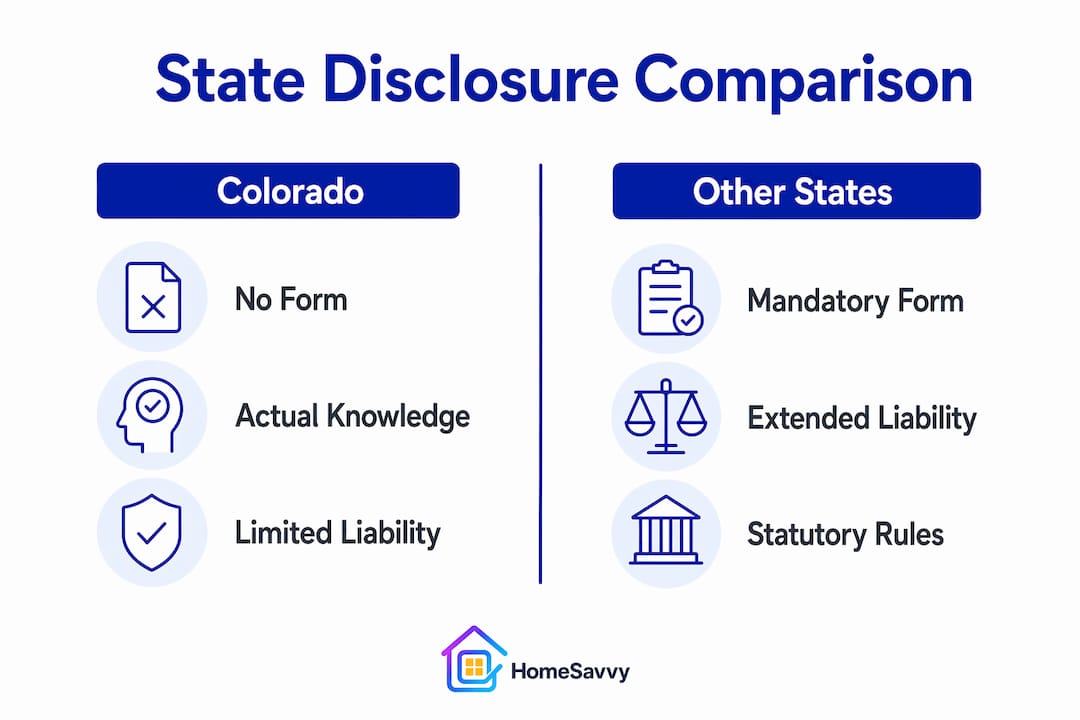
Pennsylvania law, for example, allows buyers up to two years after settlement to sue for nondisclosure, with damages covering actual losses when concealment was knowing. Colorado does not have an identical statutory window, but fraud and misrepresentation claims under Colorado law can expose sellers to significant liability for years after a transaction closes.
The practical takeaway: Colorado's "actual knowledge" standard gives sellers a narrower but still meaningful duty. Sellers who document everything they know are in a far stronger legal position than those who rely on vague recollections. Buyers moving to Colorado from states with more prescriptive forms should not assume Colorado disclosures are less thorough. They are simply structured differently.
Common property issues sellers must disclose
The most common disclosure topics include environmental hazards, HOA fees, neighborhood nuisances, and stigmatized property events. Colorado sellers should treat the SPD form as a living document that captures all relevant known facts, even those not explicitly listed on the form.
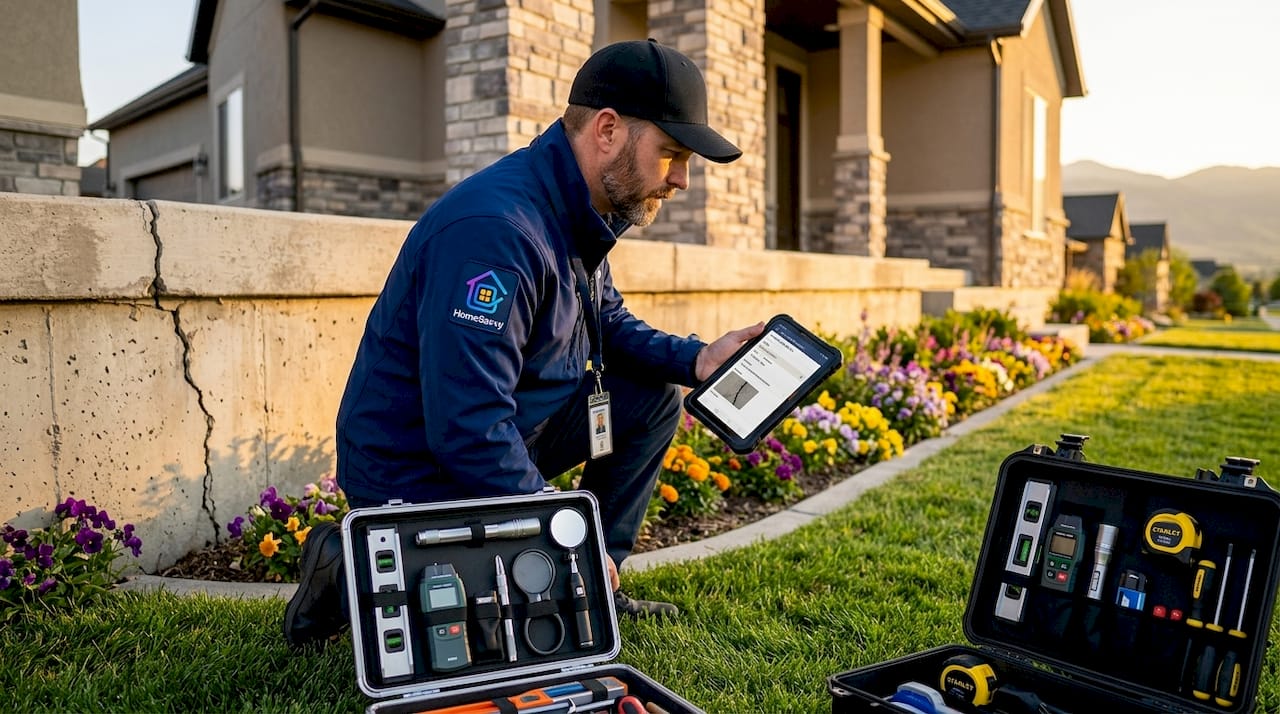
Structural and physical defects top the list. A seller who had a contractor repair a cracked foundation three years ago must disclose that repair, even if the fix appears successful. The repair history is an adverse material fact because it signals prior structural stress to the buyer.
Environmental hazards deserve particular attention in Colorado. Radon is a genuine concern across the Front Range and mountain communities. Sellers who have tested for radon and received elevated readings must disclose those results. Mold discovered during a bathroom renovation, asbestos in older popcorn ceilings, and lead paint in pre-1978 homes all require disclosure under federal and state frameworks.
HOA-related disclosures catch many sellers off guard. Pending special assessments, active litigation involving the HOA, and restrictive covenants that limit short-term rentals or exterior modifications are all material facts a buyer needs before signing a contract. Failing to disclose a $15,000 pending special assessment is the kind of omission that ends deals and starts lawsuits.
Pro Tip: Colorado law does not require sellers to disclose that a death occurred on the property unless the buyer specifically asks. However, if a death involved circumstances that could affect the property's physical condition, such as a crime that caused structural damage, that physical impact must be disclosed.
Permit violations deserve a separate mention. An unpermitted basement finish or garage conversion affects insurability, resale value, and sometimes safety. Sellers who know about unpermitted work must disclose it, and buyers who discover it after closing have a strong basis for a legal claim.
How real estate disclosures protect buyers and sellers
Disclosures function as a risk-allocation tool that protects both parties by informing buyer decisions and limiting seller liability when issues are properly disclosed. This dual protection is the core reason disclosure laws exist across every U.S. state.
For buyers, the protection works in three concrete ways:
- Informed offer decisions. A buyer who learns about a 10-year-old roof can factor replacement costs into their offer price or request a credit at closing.
- Targeted due diligence. Disclosed issues direct buyers toward specific inspections. A disclosed history of water intrusion should trigger a professional moisture assessment, not just a standard home inspection.
- Legal recourse. When sellers conceal known defects, buyers have grounds for fraud, misrepresentation, or breach of contract claims. Courts require proof of the seller's actual knowledge and the buyer's justifiable reliance on the omission.
For sellers, thorough and honest disclosures create a documented record that limits post-sale liability. A seller who discloses a repaired plumbing leak, attaches the plumber's invoice, and notes the repair date has substantially reduced their exposure if the buyer later claims the issue was hidden. The documentation transforms a potential fraud claim into a contract dispute about the adequacy of repairs, which is a much narrower legal problem.
The risk of concealment is asymmetric. Sellers who hide known defects face potential rescission of the sale, damages, and attorney fees. Sellers who disclose fully and honestly face almost no post-sale legal risk for the issues they disclosed.
Practical tips for Colorado buyers and sellers
Buyers and sellers both carry responsibilities in the disclosure process, and reviewing disclosures carefully is not optional. Courts have consistently held that buyers who receive indications of defects have a duty to investigate further, which weakens fraud claims based solely on nondisclosure.
For sellers completing the SPD form and related disclosures:
- Gather all repair records, permits, contractor invoices, and inspection reports before completing the form
- Answer every question based on your actual knowledge, not assumptions about what the buyer wants to hear
- If you are uncertain whether something qualifies as a material fact, disclose it. Overdisclosure rarely creates legal problems; underdisclosure frequently does
- Consult a Colorado real estate attorney or your listing agent before finalizing the form if any item feels ambiguous
- Update your disclosures if new information surfaces between contract signing and closing
For buyers reviewing a seller's disclosure statement:
- Read every line, not just the items marked "yes." The absence of a disclosure can be as informative as its presence
- Cross-reference disclosed items with your property evaluation checklist to confirm nothing was missed
- Order independent inspections for every disclosed issue, not just a general home inspection
- Ask your buyer's agent to explain any disclosure language that seems vague or incomplete
- Understand that a disclosure is not a warranty. A seller disclosing a past roof repair is not guaranteeing the roof is problem-free today
Pro Tip: If you discover a defect after closing that you believe the seller knew about and concealed, document everything immediately. Photographs, contractor assessments, and written timelines are the foundation of any post-sale legal claim in Colorado.
Understanding your buyer agent's duties in Colorado also matters here. A buyer's agent is obligated to help you review and interpret disclosures, flag inconsistencies, and recommend appropriate inspections based on what the seller has revealed.
Key takeaways
Real estate disclosures in Colorado protect both buyers and sellers when sellers document their actual knowledge honestly and completely, and buyers treat disclosures as a starting point for independent due diligence.
| Point | Details |
|---|---|
| Colorado's disclosure standard | Sellers must disclose adverse material facts based on actual knowledge, not assumed or constructive knowledge. |
| As-is sales still require disclosure | Listing a property as-is does not remove the duty to disclose known defects under Colorado law. |
| Documentation is your defense | Linking disclosures to permits, receipts, and contractor records protects sellers from post-sale claims. |
| Buyers must investigate | Disclosures are a starting point. Independent inspections are required to verify disclosed and undisclosed conditions. |
| Concealment carries serious risk | Sellers who hide known defects face fraud claims, damages, and potential rescission of the sale. |
What I've learned about disclosures after years in Colorado real estate
The most common mistake I see sellers make is treating the SPD form like a legal liability to minimize rather than a communication tool to use honestly. Sellers who answer vaguely, omit inconvenient history, or assume buyers won't notice are setting themselves up for post-closing disputes that cost far more than any repair credit would have.
The "actual knowledge" standard in Colorado is genuinely protective for sellers, but only when they use it correctly. I have seen sellers claim they "didn't know" about a defect that their own contractor emails clearly documented. That defense collapses immediately in litigation. The standard protects honest sellers, not careless ones.
For buyers, the disclosure form is not a guarantee of a defect-free property. It is a window into what the seller knows. Treat every disclosed item as a reason to dig deeper, not a reason to feel reassured. A seller disclosing past water intrusion is telling you something important about the property's history. What you do with that information, including ordering a thorough moisture inspection, is your responsibility.
The transactions I have seen go smoothest are the ones where sellers disclosed everything they knew, buyers asked every question they had, and both parties treated the process as a shared interest in a clean, honest deal. That is not idealism. It is just good practice.
— Rishi
How Homesavvycolorado helps you navigate property disclosures
Understanding a disclosure is one thing. Knowing what a disclosed defect actually means for a property's value is another challenge entirely.

Homesavvycolorado's PropertyIQ AI Home Valuation tool helps buyers and sellers assess how disclosed conditions affect a property's real market value in Colorado. If a seller discloses a repaired foundation or aging HVAC system, PropertyIQ gives you data-backed context to evaluate the impact on price. Sellers benefit from Homesavvycolorado's reduced listing fee service, which pairs full-service agent support with Colorado-specific disclosure guidance so nothing gets missed. Whether you are buying or selling in Denver, Boulder, Colorado Springs, or anywhere across the Front Range, Homesavvycolorado combines local expertise with real-time market data to help you make decisions you can stand behind.
FAQ
What is a real estate disclosure form?
A real estate disclosure form is a written document where sellers declare known material defects, hazards, and adverse facts about a property before the buyer signs a purchase contract. In Colorado, the CREC Seller's Property Disclosure (SPD) form is the standard document used in most transactions.
Do Colorado sellers have to use a specific disclosure form?
Colorado has no statutory mandate requiring one specific form, but CREC contract language effectively requires sellers to complete and deliver the SPD form reflecting their current knowledge of the property's condition.
Does selling a home as-is eliminate disclosure requirements?
No. An as-is clause does not remove a Colorado seller's duty to disclose known adverse material facts. Sellers who list as-is but conceal known defects remain fully exposed to fraud and misrepresentation claims.
How long does a buyer have to sue for nondisclosure in Colorado?
Colorado does not have a single statutory window identical to Pennsylvania's two-year rule, but buyers can pursue fraud, misrepresentation, and breach of contract claims under Colorado statutes, with timelines varying by claim type. Consulting a Colorado real estate attorney is the most reliable way to assess your specific situation.
What should buyers do if they find undisclosed defects after closing?
Document the defect immediately with photographs and a professional assessment, then consult a Colorado real estate attorney to evaluate whether the seller had actual knowledge of the condition and failed to disclose it. Courts require proof of the seller's knowledge and the buyer's justifiable reliance on the omission.