

Technology defines every stage of modern home selling, from the first pricing estimate to the final e-signature at closing. The role of technology in home selling now covers AI-powered valuation models, virtual staging platforms like Plotpane, digital marketing automation, and transaction management tools that cut weeks off the traditional timeline. Sellers who understand these tools make faster decisions, attract more qualified buyers, and keep more money at closing. This guide breaks down exactly how each technology category works, where it adds the most value, and where human judgment still matters.
How do AI-powered pricing models improve home sale pricing?
AI-enabled pricing is the most consequential shift in real estate valuation in decades. AI analytics shorten contracting cycles by 15% to 35% and can boost revenue by up to 30% through dynamic pricing and forecasting. That means a seller who previously spent weeks debating a list price can now get a data-backed range in minutes, with scenario modeling showing the tradeoff between pricing high and sitting longer versus pricing competitively and closing fast.
Dynamic pricing algorithms pull from comparable sales, days-on-market trends, neighborhood absorption rates, and seasonal demand signals. The output is not a single number but a range tied to specific seller goals. A seller who needs to close in 30 days gets a different recommended price than one who can wait 90 days for a premium offer. This goal-aligned framing is where AI pricing tools genuinely separate themselves from older automated valuation models.
The limitation is real, though. Better information alone does not make seller decisions easier. Sellers still need help understanding pricing tradeoffs and connecting data to their next steps, whether that means buying another home, relocating, or timing a tax event. AI valuations also struggle with unique properties, custom builds, or homes in micro-markets with few recent comparables. In those cases, local expertise fills the gap that the algorithm cannot.
Pro Tip: Use AI valuation tools to generate a pricing range, then layer in your personal timeline and financial goals before settling on a list price. The algorithm gives you the data. You make the call.
The practical takeaway is to treat AI pricing as a starting point, not a verdict. Tools like Homesavvycolorado's PropertyIQ valuation tool combine algorithmic data with local market context, which is the combination that produces the most defensible list price. Sellers who skip the human review step and list purely on algorithmic output often find themselves repricing within two weeks.
What technology tools enhance marketing and presentation?
Presentation technology has compressed what used to be a multi-day production process into hours. Virtual staging processes photos in roughly 90 seconds at 4K resolution, compared to 24 to 48 hours for traditional human editing, at a fraction of the cost. For sellers with vacant homes or dated interiors, this is a direct competitive advantage. Buyers scrolling listings on Zillow or Realtor.com make snap judgments based on thumbnail images. A virtually staged photo stops the scroll. An empty room does not.

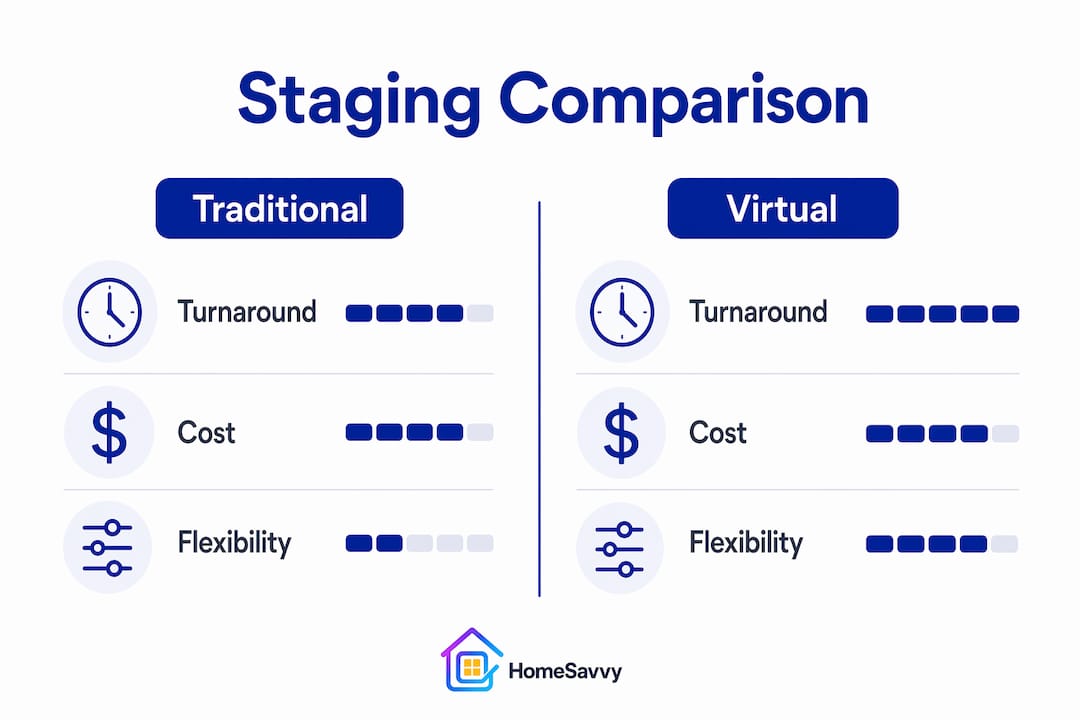
The comparison between traditional staging and AI-enabled virtual staging comes down to speed, cost, and flexibility.
| Factor | Traditional staging | AI virtual staging |
|---|---|---|
| Turnaround time | 2 to 5 days | Under 2 hours |
| Cost per room | $500 to $2,000+ | $2 to $32 per image |
| Physical furniture required | Yes | No |
| MLS disclosure required | Yes | Yes |
| Style customization | Limited by inventory | Unlimited |
Beyond staging, high-quality drone photography and AI-edited video walkthroughs have become standard tools for properties above the median price point. Targeted social media ads on platforms like Facebook and Instagram allow agents to reach buyers filtered by income, location, life stage, and search behavior. This precision targeting is something a yard sign and an MLS listing simply cannot replicate.
3D virtual tours serve a specific and underappreciated function: they filter out unqualified buyers before a showing ever happens. Buyers who have walked through a Matterport tour already know the layout, the ceiling heights, and the natural light. They show up to in-person showings ready to make decisions, not just look around. This reduces wasted showing time and increases the probability that each in-person visit converts to an offer.
Pro Tip: Always disclose AI virtual staging in your MLS listing. Professional platforms like Plotpane embed invisible metadata for compliance, but the written disclosure is your legal protection and builds buyer trust.
One technical detail worth knowing: professional staging platforms preserve structural fidelity, meaning they do not alter room geometry, window placement, or architectural features. This matters because MLS rules prohibit misrepresenting a property's physical structure. Sellers using consumer-grade AI image tools risk generating "hallucinated" architecture that violates listing standards and erodes buyer trust when they arrive at the property.
For a deeper look at how staging fits into a broader preparation strategy, Homesavvycolorado's guide on staging your home in Colorado covers both physical and digital approaches in detail.
How does technology reduce friction in transaction management?
Transaction management is where technology delivers its least glamorous but most reliable value. Automated scheduling tools eliminate the back-and-forth phone tag that used to delay showings by days. Smart scheduling increases showing volume and reduces buyer drop-off by enabling instant booking and automated reminders. More showings in the first week of listing directly correlates with more competitive offers.
Digital document workflows and e-signature platforms like DocuSign have removed the last major paper bottleneck from real estate transactions. Sellers can review, sign, and return disclosures, counteroffers, and closing documents from any device in minutes. This speed matters most during negotiation, when a delayed response can signal weak motivation to a buyer's agent and cost you leverage.
Centralized platforms that unify marketing analytics, showing feedback, offer tracking, and document management give sellers a single dashboard view of their sale. Real estate CRMs built for agents, such as those covered in Homesavvycolorado's CRM guide for 2026, organize buyer inquiries, automate follow-up sequences, and flag time-sensitive tasks so nothing falls through the cracks. For sellers working with a tech-enabled agent, this infrastructure is largely invisible. It just means faster responses and fewer mistakes.
Technology-driven platforms now support listing commissions as low as 1.99% by handling valuation, listing, and offer management through centralized dashboards. The cost savings are real. On a $600,000 home, the difference between a 5% traditional commission and a 1.99% tech-enabled fee is over $18,000 in seller proceeds.
What are the best practices for adopting home selling technology?
The most common mistake sellers make with technology is treating each tool as a standalone solution rather than part of a coordinated strategy. Without strategic execution, digital investments in real estate become sunk costs. A seller who pays for virtual staging but lists with blurry photos, or who uses an AI valuation but ignores local market context, gets none of the compounding benefit these tools are designed to deliver together.
Here is a practical framework for integrating technology at each stage of the sale:
- Pricing: Start with an AI valuation tool to establish a data-backed range. Then layer in your timeline, financial goals, and agent's local knowledge before setting the list price.
- Presentation: Use professional virtual staging for vacant or dated rooms. Pair it with drone photography and a 3D tour for properties above $400,000. Disclose all digital enhancements in the MLS listing.
- Marketing: Run targeted digital ads on Facebook and Instagram in the first two weeks of listing, when algorithmic momentum is highest. Use platform analytics to identify which buyer segments are engaging and adjust spend accordingly.
- Transaction management: Activate automated showing scheduling from day one. Use a CRM or unified dashboard to track all buyer activity and respond to inquiries within two hours.
- Closing: Use e-signature platforms for all documents. Never delay a counteroffer because of a paper process.
AI impacts real estate unevenly, improving efficiency most in localized markets where data density is high. In rural areas or niche property types, AI tools may produce less reliable outputs, and seller judgment carries more weight. Knowing where your property sits on that spectrum helps you calibrate how much to rely on algorithmic recommendations versus local expertise.
Pro Tip: Before listing, ask your agent which specific technology tools they use for pricing, marketing, and transaction management. The answer tells you more about their process than any testimonial.
Aligning technology tools to your actual next steps, not just generating data, is the standard that separates effective adoption from expensive experimentation. Sellers who use smart selling strategies grounded in real data consistently outperform those who rely on intuition alone.
Key takeaways
Technology in home selling works best when AI pricing, professional digital media, and automated transaction tools operate as a coordinated system rather than isolated features.
| Point | Details |
|---|---|
| AI pricing needs human context | Use AI valuations as a range, then align the list price to your timeline and financial goals. |
| Virtual staging is fast and regulated | Professional tools like Plotpane process images in 90 seconds and embed MLS-compliant disclosure metadata. |
| 3D tours filter unqualified buyers | Buyers who complete a virtual tour arrive at showings ready to decide, increasing offer conversion rates. |
| Automation speeds the transaction | Smart scheduling, e-signatures, and CRM dashboards reduce delays and protect negotiating leverage. |
| Tech-enabled fees save real money | Centralized platforms support listing commissions as low as 1.99%, versus the traditional 5% to 6%. |
Why I think most sellers underestimate the pricing conversation
Most sellers I talk to focus on the marketing side of technology. They want great photos, a Matterport tour, and targeted ads. Those tools matter. But the pricing conversation is where technology creates the most underutilized advantage, and where sellers leave the most money on the table.
AI valuation models now surface data that used to require hours of manual comparable analysis. The problem is that sellers often receive this data as a number rather than a decision framework. A number without context does not help you decide whether to price at $725,000 or $749,000. A scenario model that shows you the statistical probability of a first-week offer at each price point, tied to your specific move-out date, actually changes the decision.
I have seen sellers overprice by 8% because an AI tool gave them a high-end estimate and they anchored to it. I have also seen sellers underprice because they ignored the AI output entirely and relied on a neighbor's sale from 14 months ago. Neither extreme serves you. The sellers who get the best outcomes treat AI pricing as one input in a structured conversation, not as the final word.
The same logic applies to smart home features. Proper integration of smart home technology is what determines whether those features add value or become a liability during inspection. A Nest thermostat that works seamlessly is a selling point. A smart lock with a dead battery and no documentation is a red flag. Technology amplifies what is already there. It does not fix what is broken.
— Rishi
How Homesavvycolorado puts these tools to work for you
Homesavvycolorado combines AI-powered property insights with full-service agent support to give Colorado sellers a real advantage at every stage of the sale.

The platform's PropertyIQ valuation tool delivers real-time pricing analysis grounded in local Colorado market data, so your list price is defensible from day one. Sellers who list through Homesavvycolorado access professional digital marketing, automated showing scheduling, and e-signature workflows, all at a 1% listing fee that keeps significantly more of your equity in your pocket. On a $700,000 sale, that difference compounds fast. If you want to see exactly how much you could save while selling with full technology support, Homesavvycolorado is the place to start.
FAQ
What is the role of technology in home selling?
Technology in home selling covers AI-powered pricing models, virtual staging, digital marketing platforms, 3D tours, and automated transaction management tools. Together, these tools reduce time on market, improve buyer reach, and lower selling costs.
How accurate are AI home valuation tools?
AI valuation tools are most accurate in markets with high data density and recent comparable sales. For unique properties or rural markets, algorithmic outputs should be reviewed alongside local agent expertise before setting a list price.
Do virtual tours actually help sell homes faster?
3D virtual tours filter out unqualified buyers before in-person showings, which means the buyers who do visit are more likely to make offers. This increases showing efficiency and can accelerate the path to a competitive offer.
What commission savings can technology-enabled platforms offer?
Tech-driven platforms support listing fees as low as 1.99%, compared to the traditional 5% to 6%. On a $600,000 home, that difference represents more than $18,000 in additional seller proceeds.
Is virtual staging legal for MLS listings?
Virtual staging is legal and widely used, but MLS rules require disclosure that images have been digitally altered. Professional platforms like Plotpane embed compliance metadata automatically, and sellers should include written disclosure in the listing description.