

The real estate landscape in Colorado shifted dramatically after August 2024, and most buyers still do not fully understand what changed or what it means for their wallet. Understanding why offer rebates to buyers is now more relevant than ever because buyer agent compensation is no longer preset or published in the MLS. Buyers must negotiate compensation upfront, before the first showing. That one change turned rebates from a nice-to-have into a genuine financial strategy worth mastering before you sign anything.
Table of Contents
- The new landscape of buyer agent compensation in Colorado
- What are rebates and how do they work in real estate?
- Rebates versus discounts: why rebates benefit buyers and sellers
- How to negotiate and maximize rebates in Colorado's real estate market
- Using AI insights to enhance rebate and commission benefits
- Our perspective: the real reason rebates matter now
- How HomeSavvy helps you use rebates to your advantage
- Frequently asked questions
Key Takeaways
| Point | Details |
|---|---|
| NAR settlement impact | Buyer agent commissions must now be negotiated upfront in a written agreement before home showings. |
| Rebate benefits | Rebates offer buyers post-purchase savings while helping sellers maintain profit margins better than discounts. |
| Negotiation timing | Negotiating rebates before touring homes maximizes buyer leverage and avoids unexpected costs. |
| AI support | AI-powered valuation tools enhance buyer confidence and negotiation power in rebate discussions. |
| Informed choice | Understanding rebates and commissions helps Colorado buyers and sellers save money and make smarter deals. |
The new landscape of buyer agent compensation in Colorado
For decades, buyer agent commissions were baked into MLS listings. Sellers offered a fixed percentage to whoever brought a buyer, and most buyers never saw that number or thought about it twice. That system ended.
Following the August 2024 NAR settlement, buyer agent compensation is no longer preset or published in the MLS. Buyers must now sign a written Buyer Representation Agreement before touring any home. That agreement spells out exactly what the agent earns and under what conditions a rebate might apply.
This shift matters because it puts negotiating power in your hands earlier in the process. Before, you were essentially walking into an arrangement that was already priced. Now, you set the terms. Understanding what those terms can include, specifically rebates and reduced fees, is the difference between leaving money on the table and keeping it.
Here is what changed under the new rules:
- MLS commission listings removed: Buyers can no longer see what sellers offered agents, eliminating an assumed baseline.
- Written agreements required: You must sign a Buyer Representation Agreement before any home showing, not after you find a property you love.
- Agent compensation is negotiable: Fees, rebates, and concessions are now open for discussion rather than fixed by industry convention.
- Seller concessions still exist: Sellers can still offer to cover buyer agent fees as part of a transaction, but it is negotiated deal by deal.
- Early consultations are essential: Understanding buyer agent duties before you start touring homes protects your financial interests.
The practical implication is that buyers who walk into their first home showing without a signed agreement are already behind. You lose negotiating leverage the moment emotion enters the picture.
What are rebates and how do they work in real estate?
Before you can negotiate a rebate, you need to know exactly what you are negotiating. A rebate in real estate is a post-purchase refund of a portion of the agent's commission back to the buyer. It is not a price cut on the home. It is cash back to you, typically after closing.
A rebate is a retroactive pricing incentive where a portion of the purchase price is returned to the buyer after the sale. In real estate, this usually means your agent agrees to return part of their commission to you at or after closing, reducing your net cost of buying the home.
Rebates differ from discounts in a meaningful way. A discount lowers the upfront price. A rebate delivers savings after the transaction closes. That distinction matters for home values, appraisals, and how sellers perceive offers. An offer at full asking price with a rebate structured into the buyer's side of the deal often looks cleaner to a seller than a discounted offer.
Key facts buyers should know about real estate rebates:
- Rebates are legal in Colorado. Some states restrict or ban them, but Colorado allows buyers to receive rebate payments from their agent.
- The rebate amount is negotiated in the Buyer Representation Agreement, not after you find a home.
- Rebates can be applied toward closing costs, credited to your account, or paid directly to you depending on lender rules.
- Lenders sometimes have requirements about how rebates are disclosed, so confirm the structure with your loan officer early.
- A Colorado real estate savings checklist can help you track rebate terms alongside other cost-saving opportunities.
Pro Tip: Ask your agent for the rebate amount in writing before you start touring homes. A verbal agreement carries no weight at the closing table.
Rebates versus discounts: why rebates benefit buyers and sellers
This comparison trips up a lot of buyers. On the surface, a discount sounds better because it lowers the price you pay. But rebates often deliver more practical value for both sides of a transaction, and the math is not obvious until you see it laid out.
Rebates are more cost-effective than discounts, often costing sellers 33% less while preserving perceived value. That gap exists because not every buyer who qualifies for a rebate actually claims it. Sellers structure rebate programs knowing that some percentage of buyers will leave money unclaimed. It is not deceptive; it is how delayed incentives work in every industry.

For buyers, the psychological effect runs the other direction. You tend to value a rebate promise at face value even before you receive it, which makes the home feel like a better deal than a price reduction of the same dollar amount would. That behavioral quirk works in your favor when you understand it.
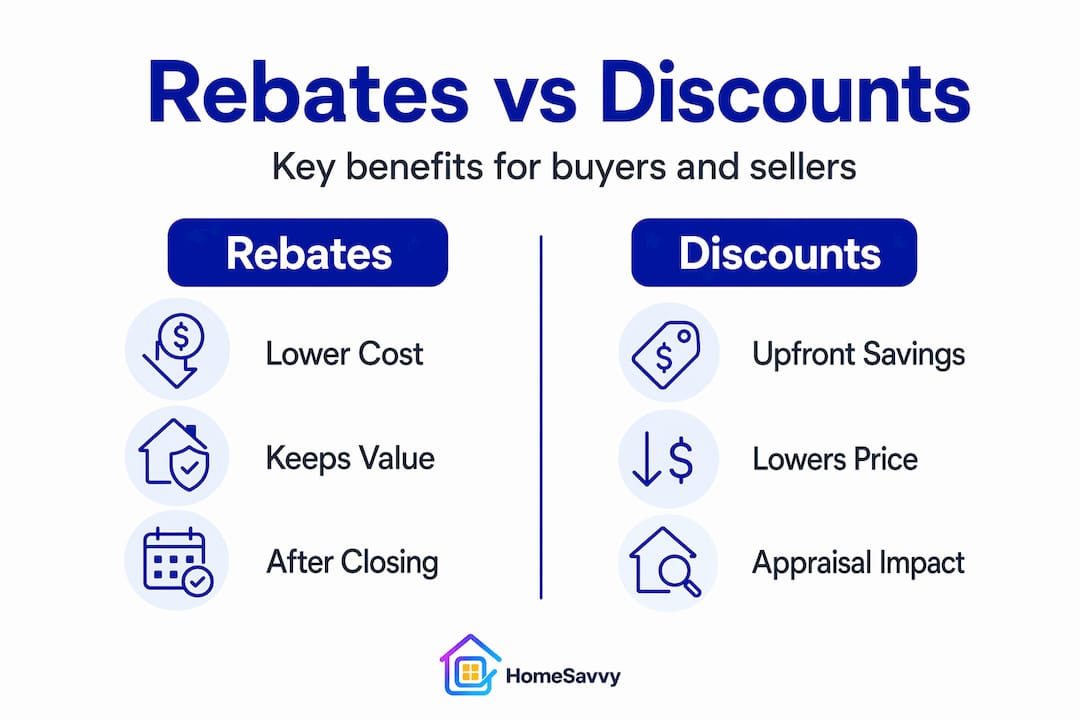
| Factor | Rebate | Discount |
|---|---|---|
| When savings occur | After closing | At time of purchase |
| Impact on list price | None | Reduces apparent value |
| Seller profit margin | Better protected | Reduced upfront |
| Buyer perception of value | High (future reward) | Moderate |
| Appraisal impact | Minimal | Can affect comparables |
| Lender involvement | Requires disclosure | Standard |
Benefits of rebates for Colorado buyers include:
- Cash back at closing that can offset closing costs directly.
- No impact on the home's appraised value, which protects the deal from collapsing due to a low appraisal.
- Stronger offers because full-price offers with rebates on the buyer side look better to sellers.
- Flexibility in how you apply the funds, including using them toward your down payment in some cases.
Pro Tip: When you negotiate realtor fees in Colorado, frame the conversation around total transaction cost rather than just commission percentage. That framing opens the door to rebate structures most buyers never think to ask about.
How to negotiate and maximize rebates in Colorado's real estate market
Knowing rebates exist is the first step. Knowing how to secure one before you fall in love with a property is where the real work happens.
Negotiating the agent's rebate and compensation must occur in the Buyer Representation Agreement before touring homes. Waiting until you are mid-negotiation on a specific property strips you of leverage entirely. Follow these steps to protect your position:
- Schedule a buyer consultation first. Before you look at a single listing, sit down with your agent to discuss all compensation options and specifically ask what rebate you qualify for.
- Negotiate the Buyer Representation Agreement terms. Document the exact rebate amount or percentage in writing before you tour any home. Verbal promises do not hold.
- Request seller concessions toward buyer agent fees. During offer negotiation, ask the seller to contribute to your agent's compensation. This reduces your out-of-pocket cost further and is still common practice in Colorado.
- Choose agents who communicate value clearly. Agents who can explain what they do, and what you get for their fee, are also more likely to honor rebate commitments without friction at closing.
- Review rebate terms with your lender. Some loan programs require rebates to be disclosed and applied in specific ways. Confirming this early prevents last-minute surprises.
- Work with agents who specialize in buyer savings. You can find discount real estate agents in Colorado who build rebate structures into their standard agreements.
Understanding buyer rebates in Colorado fully before you start your search is the single best preparation move you can make.
Pro Tip: If an agent hesitates to discuss rebates or dismisses the concept, that tells you something about how they handle every other financial conversation in a transaction.
Using AI insights to enhance rebate and commission benefits
Negotiating a rebate without knowing what a property is actually worth is negotiating blind. This is where data tools change the game entirely.
Data-driven market insights help buyers understand true home value and negotiate rebates and commissions effectively. When you walk into a negotiation knowing the property's real market value, you know whether the commission structure makes sense, whether the rebate offered is proportionate, and whether the seller's asking price leaves room for concessions.
Here is how AI-powered tools support better rebate outcomes:
- Accurate property valuations prevent you from overpaying, which directly affects the real dollar value of any rebate you receive.
- Neighborhood trend data reveals whether prices are rising or softening, which affects how aggressively you should negotiate.
- Comparable sales analysis strengthens your position when asking sellers to cover buyer agent fees.
- Real-time market conditions help your agent time offers and rebate requests for maximum effect.
| AI tool benefit | Impact on buyer rebates |
|---|---|
| Home valuation accuracy | Confirms rebate is proportionate to actual value |
| Market trend analysis | Identifies best times to negotiate aggressively |
| Comparable sales data | Supports requests for seller concessions |
| Pricing history | Reveals negotiating room in asking price |
An AI home valuation from HomeSavvy gives you that data layer before you make any decisions. Understanding why data matters for Colorado buyers is the foundation for every smart financial move in a transaction, including how you structure your rebate request.
Our perspective: the real reason rebates matter now
Most articles about rebates treat them as a bonus. We think that framing undersells what is actually happening in Colorado's market right now.
The 2024 NAR settlement did not just change paperwork. It fundamentally altered who pays attention to agent compensation and when. For the first time, buyers are being asked to think like informed consumers before they enter a transaction rather than after it closes. That is uncomfortable for buyers who are used to assuming agents work for free, and it is uncomfortable for agents who are used to not having that conversation.
Rebates are the clearest signal that an agent is working in your financial interest. An agent who offers a rebate is telling you directly: my services are worth a specific fee, and I am willing to share a portion of that fee with you because the deal still makes sense for me. That transparency is rare in real estate, and buyers should seek it out deliberately.
The agents and platforms that resist the rebate conversation are often the ones whose business model depends on buyers not asking hard questions. The agents and platforms that lead with rebates have nothing to hide about where the money flows.
For sellers, the calculation is different but equally important. Offering buyer agent fee concessions as part of your listing strategy attracts more buyers and keeps offers cleaner. You are not lowering your price. You are funding a buyer incentive that increases competition for your property. That is not a cost. That is positioning.
The buyers who come out of this new commission environment with the best outcomes will be the ones who treated the Buyer Representation Agreement as a financial document, not just a formality.
How HomeSavvy helps you use rebates to your advantage
Colorado buyers and sellers deserve tools that match the complexity of today's market.

HomeSavvy combines AI-powered property insights with full-service agent support to help you make smarter, more cost-effective decisions from the first consultation to closing day. Buyers receive significant commission rebates built into their agreements, not offered as an afterthought. Sellers benefit from reduced listing fees without sacrificing service or market exposure. And every decision is backed by proprietary home valuation and market trend data you can access in real time. If you are ready to see what your home is worth or understand exactly what rebate you qualify for, start with HomeSavvy's property tools today.
Frequently asked questions
Do buyers have to pay their real estate agent's commission in Colorado?
Buyers typically negotiate agent compensation in a written Buyer Representation Agreement before touring homes. Sellers often cover fees through concessions, but buyers carry the contractual responsibility and must understand the terms before any showings.
How can buyers receive a rebate when purchasing a home in Colorado?
Buyers receive rebates by negotiating them before touring homes and documenting the terms in their Buyer Representation Agreement, or by requesting seller concessions that cover agent fees during the offer process.
Why are rebates often better than discounts for homebuyers?
Rebates preserve price perception better than upfront discounts, protecting home value and appraisal outcomes while still delivering real cash savings to buyers after closing.
What is the best time to negotiate rebates with a real estate agent?
The best time is before any home showings, when signing the Buyer Representation Agreement. Waiting until after touring homes removes your leverage and may leave rebate terms undefined.
How does artificial intelligence help buyers with rebates?
AI tools deliver accurate home valuations and market comparisons, giving buyers the data-backed leverage they need to negotiate commissions and rebates from a position of knowledge rather than guesswork.