

A fixture in real estate is any item originally movable that has been permanently attached to a property, making it a legal part of that real estate and transferring to the buyer at closing. Colorado buyers and sellers routinely clash over whether specific items stay or go, and those disputes can delay or kill a deal. Understanding the real estate fixture definition before you sign a purchase agreement is the clearest way to protect yourself. Items attached by bolting, plumbing, wiring, or screwing transfer automatically to buyers unless the seller explicitly excludes them in writing.
What is a fixture in real estate, legally speaking?
Courts and real estate attorneys use two primary tests to decide whether an item is a fixture or personal property. Getting these tests wrong costs buyers and sellers real money.
The annexation test
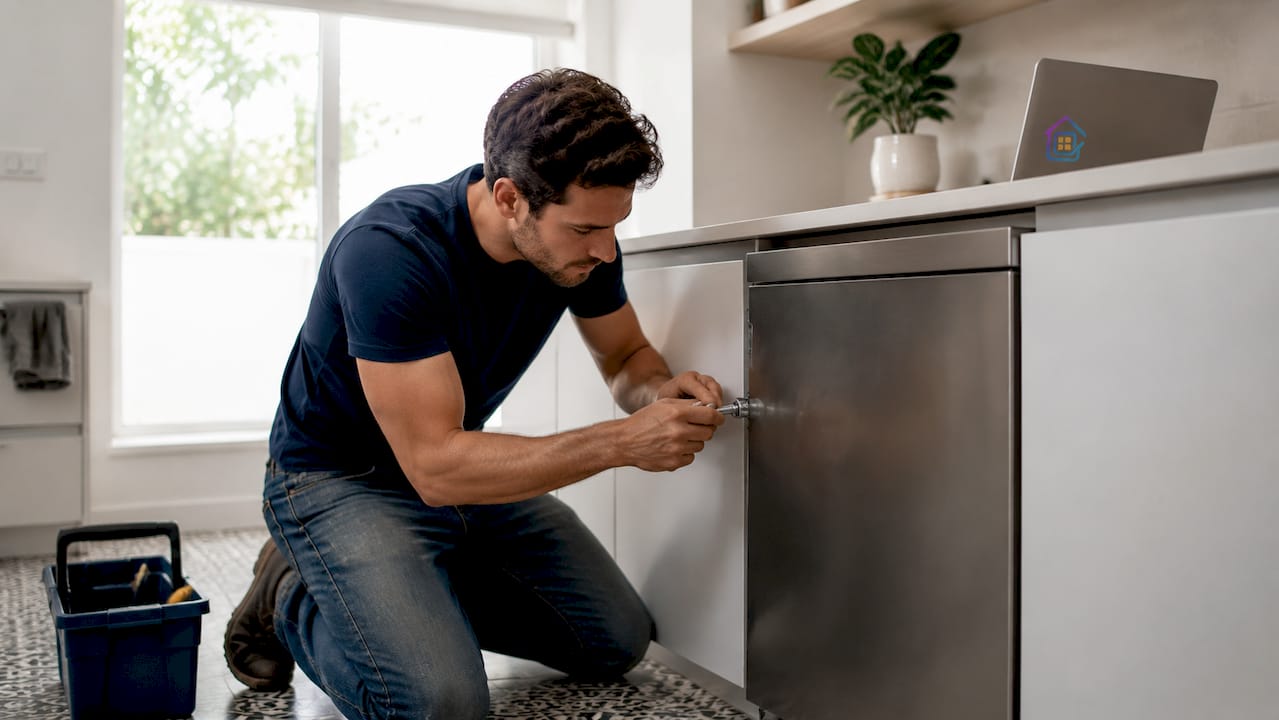
The annexation test asks one question: how permanently is the item attached? A built-in dishwasher bolted to cabinetry and connected to plumbing scores high on annexation. A freestanding refrigerator scores zero. If removal damages the property or leaves it structurally incomplete, courts treat the item as a fixture. Think of a wall-mounted flat screen that leaves gaping holes and exposed wiring when removed.
The intention test
The intention test looks at why the item was attached. A seller who installs a custom built-in bookcase intends it to be permanent. A seller who hangs a chandelier they plan to take to their next home has a different intention, but that intention must be stated in writing to hold up. Only written contract terms are enforceable in disputes. Verbal promises about what stays or goes are legally worthless in Colorado transactions.
Pro Tip: If you are a seller and you love your dining room chandelier, replace it before listing the home. Swap it for a comparable fixture, keep the original, and avoid the negotiation entirely.
Commercial real estate adds another layer. Trade fixtures in commercial properties can be removed by tenants if the lease permits, even when they are physically attached. This shows that physical attachment alone does not determine fixture status. Context and contract terms always matter.
What are common examples of fixtures in Colorado real estate?
Knowing which items count as fixtures and which do not is the fastest way to avoid a closing-day argument. Colorado real estate agents deal with these disputes more often than most buyers expect.
Items that are almost always fixtures
Common fixture examples include:
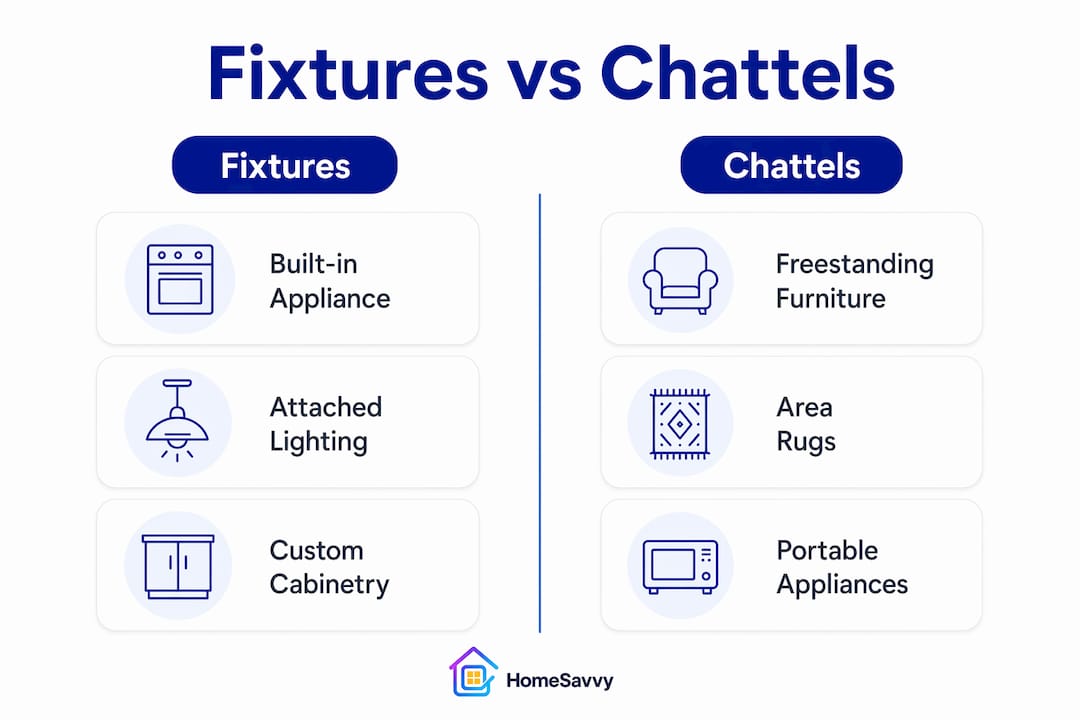
- Built-in dishwashers, wall ovens, and cooktops
- Ceiling fans and hardwired light fixtures
- Kitchen and bathroom cabinetry
- Sinks, toilets, bathtubs, and showerheads
- In-ground sprinkler systems and irrigation lines
- Fences, decks, and attached pergolas
- Central air conditioning units and furnaces
These items are physically integrated into the home. Removing them would leave the property incomplete or damaged.
Items that are almost never fixtures
Freestanding furniture, area rugs, curtains, and portable appliances are personal property, also called chattels. They belong to the seller and leave with them unless the purchase agreement says otherwise. A buyer who wants the seller's freestanding washer and dryer must list those items explicitly as inclusions in the contract.
The gray zone: fixtures vs. chattels in real estate
Some items genuinely sit on the line between fixture and chattel. These are the ones that cause the most friction in Colorado transactions.
| Item | Typically a Fixture? | Why It's Complicated |
|---|---|---|
| Chandelier | No (often excluded) | Sellers frequently intend to take decorative chandeliers |
| Wall-to-wall carpet | Yes | Tacked down and integrated into flooring |
| Window blinds | Yes | Mounted and attached to window frame |
| Curtains and drapes | No | Hung on removable rods, treated as personal property |
| Outdoor potted plants | No | Portable and not attached to soil |
| In-ground landscaping | Yes | Rooted in soil, considered part of real property |
| Garage door opener | Yes | Hardwired and physically attached to structure |
| Freestanding refrigerator | No | Not attached, moves freely |
The chandelier situation is the most common source of conflict in Colorado home sales. A seller installs a $2,000 designer chandelier, assumes everyone knows they are taking it, and says nothing in the contract. The buyer assumes it stays. Both parties are surprised at closing. Listing inclusions and exclusions clearly in the purchase agreement eliminates this problem entirely.
How do fixtures affect real estate contracts in Colorado?
The core rule is simple: fixtures transfer automatically to the buyer at closing unless the seller lists them as exclusions in the purchase agreement. That single rule causes more confusion than almost any other part of a Colorado real estate transaction.
Here is how to handle fixtures correctly on both sides of the deal:
-
Sellers: list every exclusion before going under contract. If you plan to take a built-in wine cooler, a mounted TV, or a custom light fixture, name it in the listing and in the purchase agreement. Do not assume the buyer will understand.
-
Buyers: list desired chattels as inclusions. If you want the seller's washer, dryer, or freestanding refrigerator to stay, write those items into the contract. They are personal property and will not transfer automatically.
-
Both parties: get everything in writing. Verbal promises are unreliable and unenforceable. A seller who promises verbally to leave the garage shelving has no legal obligation to follow through.
-
Sellers: consider replacing contentious fixtures before listing. Fixture disputes are a frequent cause of delayed closings and post-closing litigation. Swapping out a prized fixture for a standard replacement before the home hits the market removes the issue entirely.
-
Buyers: do a final walkthrough with the fixture list in hand. Confirm that every included item is still present and that no fixtures have been removed or damaged since the inspection.
Pro Tip: Colorado's standard purchase contract includes a section for inclusions and exclusions. Fill it out completely. Leaving it blank is an invitation for a dispute that neither party wants.
Understanding why Colorado homes fail to sell often comes back to avoidable contract issues, and fixture misunderstandings rank near the top of that list.
How do fixtures affect home valuation and property taxes in Colorado?
Permanent fixtures raise a property's assessed value, which directly affects property taxes. This is a consequence that both buyers and sellers in Colorado often overlook until after closing.
Adding or modifying fixtures like custom kitchens, whole-house generators, or built-in outdoor kitchens increases the home's assessed value. A higher assessed value means a higher annual property tax bill. Buyers evaluating a home with high-end fixture upgrades should factor that ongoing cost into their budget.
Key valuation points to keep in mind:
- Fixture upgrades increase assessed value. A $40,000 kitchen remodel with built-in appliances and custom cabinetry raises what the county assessor sees as the property's worth.
- Buyers inherit the tax consequence. When you purchase a home with premium permanent fixtures, you take on the associated tax assessment. Request the current tax bill and ask your agent whether recent improvements have triggered a reassessment.
- Insurance coverage differs. Fixtures are typically covered under a standard homeowner's insurance policy as part of the dwelling. Personal property or chattels fall under a separate coverage category with different limits. Knowing which category an item falls into matters when you file a claim.
- Sellers should document fixture improvements. Receipts and permits for fixture upgrades support a higher listing price and give buyers confidence in the quality of the work.
The tax angle is especially relevant in Colorado's Front Range markets, where home values and assessments have shifted significantly in recent years. A whole-house generator or a built-in outdoor kitchen can push a property into a higher tax bracket without the owner realizing it until the next assessment cycle.
Key Takeaways
In Colorado real estate, a fixture is any permanently attached item that legally transfers with the property at closing unless explicitly excluded in writing.
| Point | Details |
|---|---|
| Fixtures transfer automatically | Any item permanently attached to the home goes to the buyer at closing unless the seller lists it as an exclusion. |
| Two legal tests apply | Courts use the annexation test and the intention test to classify items as fixtures or personal property. |
| Written contracts control outcomes | Verbal agreements about fixtures are unenforceable; only written purchase agreement terms hold up in Colorado. |
| Gray-zone items cause disputes | Chandeliers, garage door openers, and built-in wine coolers are the most common sources of closing conflicts. |
| Fixtures affect taxes | Permanent fixture upgrades raise assessed property value and increase annual property tax obligations for buyers. |
Fixtures are where deals quietly fall apart
I have seen Colorado closings delayed by a single chandelier. Not a structural issue, not a title problem. A chandelier the seller assumed everyone knew they were taking. The buyer assumed it stayed. Neither party had written anything down. The deal nearly fell apart over a light fixture.
That experience taught me something most real estate articles skip: fixture disputes are not really about the items themselves. They are about assumptions. Sellers assume buyers understand what is personal property. Buyers assume everything they saw during the showing stays with the home. Both assumptions are wrong, and neither is protected without a written contract.
My advice to every Colorado seller is to walk through the home before listing and physically tag or photograph anything you plan to take. Then list every single one of those items in the purchase agreement as an exclusion. It takes 20 minutes and prevents weeks of headaches.
For buyers, the final walkthrough is your last line of defense. Bring the inclusions and exclusions list from your contract. Verify every item. If something is missing or damaged, you have legal recourse before closing. After closing, you have a much harder fight.
Fixture clarity does not just protect you legally. It builds trust with the other party and keeps the transaction moving. A clean, specific contract signals that you are a serious, organized buyer or seller. That reputation matters in a competitive Colorado market.
— Rishi
How Homesavvycolorado can help you navigate fixtures and contracts
Fixture questions are just one piece of a Colorado real estate transaction, but they are the piece that most often catches buyers and sellers off guard. Homesavvycolorado combines full-service agent support with AI-powered property data to help you make confident decisions at every stage of the deal.

Use the PropertyIQ home valuation tool to see how fixture upgrades and property features affect your home's current market value in real time. If you are selling, Homesavvycolorado's agents help you structure your inclusions and exclusions correctly from day one, so fixture disputes never reach the closing table. Sellers can list for just 1% with Homesavvycolorado's discount listing service, keeping more equity in your pocket while getting expert contract guidance throughout.
FAQ
What is the real estate fixture definition?
A fixture in real estate is any item originally movable that has been permanently attached to a property through bolting, plumbing, wiring, or similar methods, making it legally part of the real estate. Fixtures transfer automatically to the buyer at closing unless excluded in writing.
Are appliances fixtures in a Colorado home sale?
Built-in appliances like wall ovens, dishwashers, and cooktops are fixtures and transfer with the home. Freestanding appliances like refrigerators and washing machines are personal property and must be listed as inclusions in the purchase agreement if the buyer wants them to stay.
What counts as a chattel vs. a fixture?
A chattel is any movable item that is not permanently attached to the property, such as freestanding furniture, area rugs, and portable appliances. A fixture is permanently attached and legally part of the real estate. The distinction controls what transfers at closing.
How do I exclude a fixture from a Colorado home sale?
A seller must list the item explicitly as an exclusion in the purchase agreement before the contract is signed. Verbal agreements are not enforceable. Replacing the fixture with a comparable item before listing is the cleanest way to avoid any dispute.
Do fixtures affect property taxes in Colorado?
Yes. Permanent fixture upgrades like custom kitchens or built-in generators increase a property's assessed value, which raises the annual property tax bill. Buyers should review the current tax assessment and ask whether recent fixture improvements have triggered a reassessment.